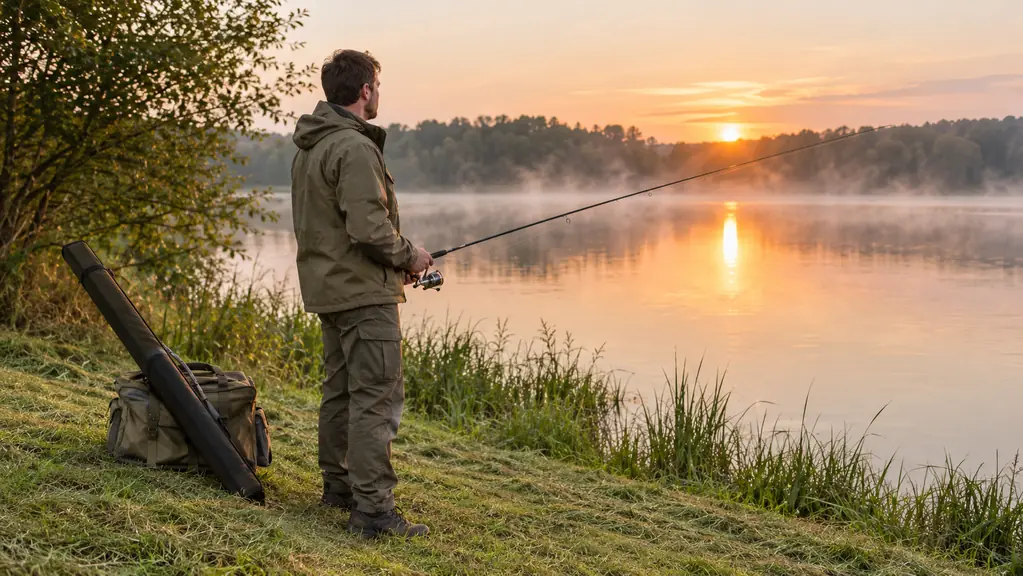
Most bank fishing advice is written by people with a boat. They tell you to cover water, make the long cast, keep moving until you find them. Then you pull up to a public bank on Lake Norman, twenty feet of red mud between two goose piles and a sycamore, and none of it means anything. You have about forty feet of open water in front of you and a brush line at your back.
A full length two piece rod is a nuisance in that spot. Nine of the ten bank spots I fish, I walk in through privet and beaver chewed saplings to get there, and a rod that stays seven feet long for the whole walk is a rod that catches on every branch between the truck and the water. That is why the PLUSINNO telescopic combo lives behind the seat of my truck these days. It is a 1.8 meter rod that collapses into a short case, and it goes from case to casting in under a minute.
A rod behind the truck seat gets fished. A rod on the garage wall does not.
1.8 m carbon fiber telescopic rod with a 3000 size spinning reel, medium heavy power, 10 lb line rating. Comes as rod and reel only, so plan on spooling it yourself the night before.
Amazon See the PLUSINNO Combo on Amazon →What Comes in the Box, Before Step One
The listing for the PLUSINNO combo says it plainly and it is worth repeating, because it trips people up. You get one rod and one reel. No line, no lures. The rod is 1.8 meters, which works out to about 5.91 feet, built from 24 ton carbon fiber reinforced with fiberglass composite, rated medium heavy with a 10 pound line weight. The reel is a 3000 size with a CNC machine cut collapsible handle that swaps from left to right hand, full metal, 5.2 gear ratio, and a listed capacity of 240 meters of 0.20 mm line, 200 meters of 0.25, and 140 meters of 0.30.
The whole thing weighs 267 grams. I put it on the kitchen scale out of curiosity and got close enough to that. It is light enough that you forget it is in the case until you want it, and that matters more than any other number in this article. The rod you actually carry is the rod you actually fish with. Every other spec is downstream of that.
Step 1: Spool the Reel at the Kitchen Table
The combo does not ship with line. If you spool it standing at the tailgate in the wind on your first morning out, you will fight loops all day and blame the reel. Do it at home the night before. I run 10 pound monofilament, which matches the rod's listed line weight, and I buy a fresh spool rather than trusting the half used spool that has been sitting in the garage since 2019.
Push a pencil through the line spool and have somebody hold it, or clamp it in a vise. Crank slowly with a little tension between your thumb and forefinger so the line goes on tight and even. Stop when the spool is about an eighth of an inch from full. A spool filled to the lip will throw loops on the first cast, and that is the most common reason a perfectly good spinning reel feels like it is misbehaving.
When you finish, close the bail by hand instead of cranking it shut. Takes two seconds and keeps the line from twisting. That one habit fixed about half the line trouble I had when I first started using spinning gear, and I have been at it a long while now.
Step 2: Extend the Rod From the Handle Up
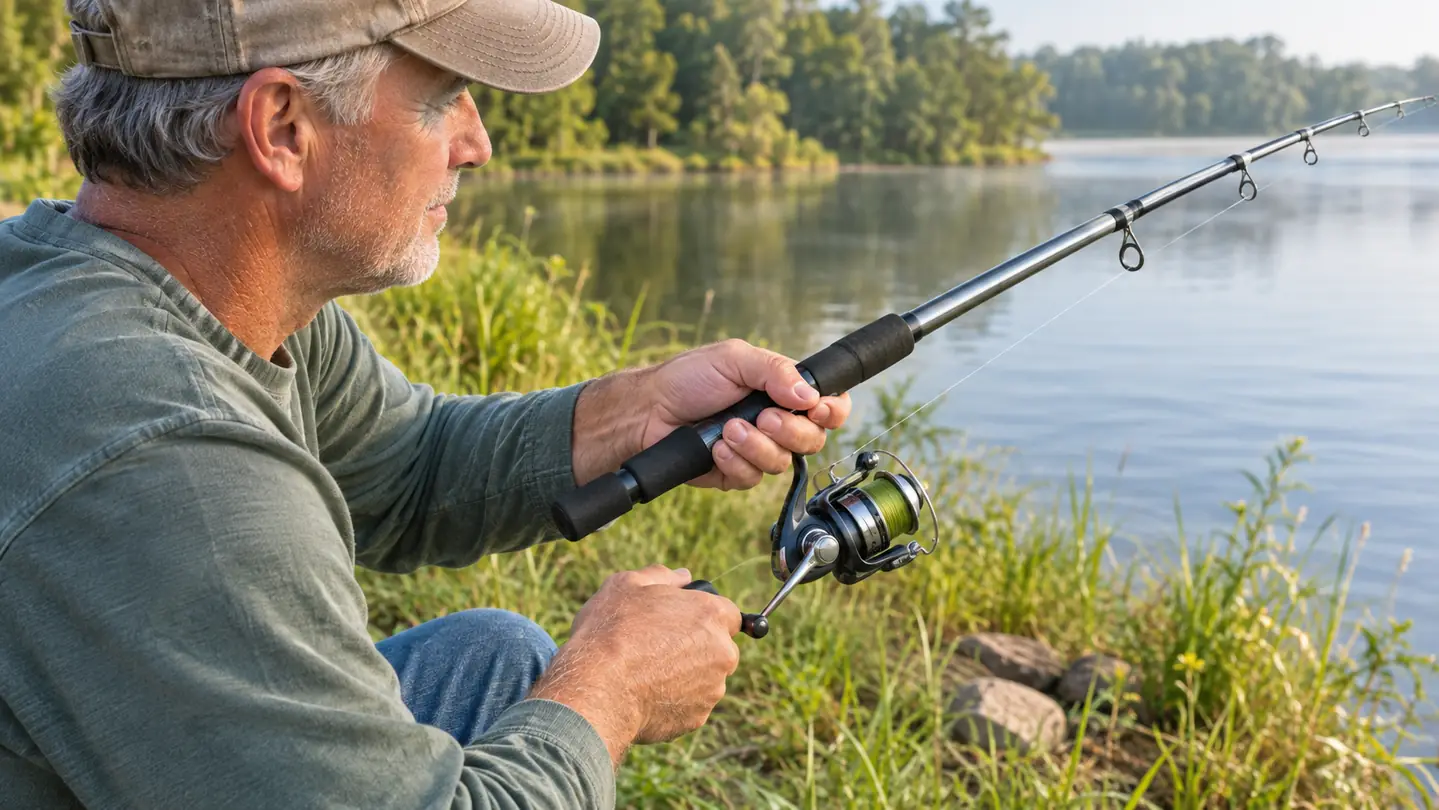
A telescopic rod comes apart the same way it goes together, in sections. Take the butt in your left hand, hold the rod at an angle across your body, and pull the tip section out first while your other hand holds the section below it. Twist each joint a quarter turn so it seats snug. Work your way down and leave the second section from the handle for last.
Do not grab the tip and yank the whole rod open. You will bend a guide, or jam a section so tight it will not come back down. And do it before you walk to the water, in good light, with both feet on flat ground. Fumbling with joints on a muddy bank at dark is how sections get lost, and a telescopic rod missing a section is a short rod with a bad attitude.
Run your eyes down the guides once you are done. They should line up in a straight line back to the reel. If one guide sits off a quarter inch, the line will rub and you will feel it on every cast. Twist that section back until it lines up. It is a five second check that saves a morning of poor distance.
Step 3: Rig Simple, Because Bank Water Eats Tackle
Bank fishing is snag fishing. You are casting at cover you cannot reach and cannot see into, and you will lose rigs. So keep it cheap and simple. On the Catawba below the dam I fish a Texas rigged soft plastic on a 3/0 hook with an eighth ounce bullet weight, pegged with a small bobber stop so it stays put. It comes through rock and laydown better than anything else I have tried, and it costs almost nothing when you break one off.
For crappie and bluegill from a neighborhood pond bank, a slip float with a sixteenth ounce jig under it, set about three feet deep, is hard to beat. My grandson Tyler fishes a float on his own rod and out catches me most Saturdays, and he mentions it every time.
Keep the knot simple. An improved clinch knot, wet before you pull it tight, is fine for 10 pound mono and it is what I tie nine times out of ten. Retie after any snag you have to break off. A knot that has been dragged across a rock is a knot that will fail on the next fish, and bank fish do not hand out many chances.
One more thing before you walk down. The reel handle is built to swap from left to right hand, so set it the way you want it in the garage, not at the water. I fish right hand on the rod and left hand on the handle. Changing it over took me about a minute at the workbench.
The rod I fish most is the one already in the truck when I drive past a creek I have never wet a line in. That is the entire argument for keeping one collapsed behind the seat.
Step 4: Cast Sidearm and Fan the Water
Overhead casting from a bank usually means a branch. Learn a sidearm or a three quarter cast, rod kept low, letting the bait go level instead of up. The rod is medium heavy with a 10 pound line rating, and it will load and throw a light bait farther than you expect if you let the rod do the work instead of muscling it. Let the rod bend. Do not force it.
Work one spot before you walk. I fan cast, roughly nine or ten casts from a single piece of bank, working left to right and shallow to deep, before I move on. Most bank fishermen make three casts and walk, and they never find out what was sitting four feet further out. Patience is worth more than a longer cast here.
Watch the line where it enters the water, not the bait. On a bright morning with the sun off the water I will watch the bait itself, but most of the time a bass picks up a soft plastic on the fall and you see the line twitch or stop before you feel a thing. Set the hook on the twitch. Waiting until you feel weight is how you miss fish that were already committed.
Keep the rod tip down while you work a bait along a bank. Tip up pulls the bait toward the surface and out of the strike zone, and it also puts your rod into the branches behind you, which is a problem a telescopic rod is supposed to solve rather than cause. Low tip, slow reel, and let the bait crawl.
Step 5: Collapse It Dry and Rinse the Reel
Loosen each section a quarter turn, then collapse from the tip down, wiping each section with a dry rag as it goes. Grit between sections is what scratches the finish and eventually freezes a joint. If the rod got rained on or splashed, let it sit open and dry before you collapse it. Carbon fiber does not mind water. A wet joint closed up for a month will gum up and fight you every time after.
The reel gets the same treatment as every other reel on my rack. A light rinse with fresh water, not a hose blast into the drag, then a wipe. Once a month, a drop of reel oil on the handle knob and the bail. That is the whole routine, and it is the reason the reels in my garage are still working instead of sitting in a bucket.
Then back into the case, behind the truck seat. That PLUSINNO case has been in and out for about two months now. It has been rained on twice and dropped once on a boat ramp, and the rod still seats and still casts straight. The listing mentions a one year manufacturer warranty, which so far I have had no reason to test.
What Else Helps
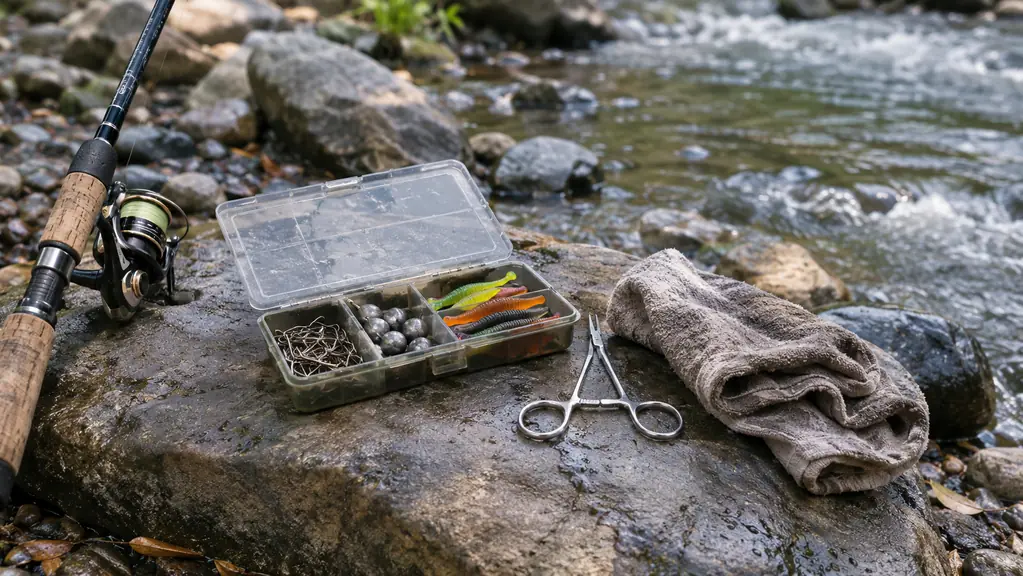
A short list of things that do more for bank fishing than any rod upgrade. A landing net you can open one handed, because the drop from a bank to the water is often three feet and lipping a bass over that edge is how fish get lost. A rag to wipe your hands. Forceps for hook removal. A small plastic tray to set tackle on so it is not sitting in the mud while you tie.
Spare line in the truck, one 10 pound and one 6 pound for crappie when the water is clear. Polarized glasses, since half of bank fishing is spotting the brush pile before you cast into it. And a walking plan. On Lake Norman and the Catawba both, the bank that gets fished least is the one you have to walk fifteen minutes to reach, and that is not a coincidence.
None of that costs much, and all of it makes the rod work better. A good combo, the PLUSINNO rod or any other, does not fix a bad landing or a dull hook. A dull hook is the number one thing I find when a bank fisherman tells me he is getting bites and not hooking fish. Check the point on your hook with your thumbnail before you make the first cast of the morning. If it does not bite into the nail, change it.
The net, the forceps and the sharp hook do the rest. The rod just has to be there.
1.8 m carbon fiber telescopic rod, 3000 size spinning reel, medium heavy power, 10 lb line rating, in a case short enough to live behind the truck seat. Rod and reel only.
Amazon Check the PLUSINNO Combo on Amazon →