A spool of 6-pound mono, a box of 1/16-ounce jigs, and a rod that lives behind the seat of my truck. That is the whole reason I bought the Ugly Stik 5-foot complete spinning kit last spring. Seven months later it is still the combo I reach for when I have an hour before dark and no interest in hitching up the trailer.
I am 58, retired out of HVAC, and I fish Lake Norman and the Catawba River below the dam two or three mornings a week. I own rods I like better than this one. That was never the point. The point was a rod that is already in the truck when the trip was not planned, and a rod I can hand to a friend who shows up at the ramp empty-handed. Judged on that job, the Ugly Stik kit has held up better than I expected for what it is. This is not a rod that will make you a better fisherman. It is a rod that will be there.
The Quick Verdict
The rod carries this kit. A light-power 5-foot two-piece blank that stows behind a truck seat and casts from a small boat without drama, paired with a plain spinning reel that does the job and nothing more.
Amazon Check Today's Price →Buy it for the rod, tolerate the reel
Light power, rated for 10-pound line, 240 yards of 6-pound mono on the spool, 16 ounces for the pair. If what you want is a spare combo and not a second hobby, this is the shape of it.
Amazon Check Today's Price on Amazon →How I've Used It
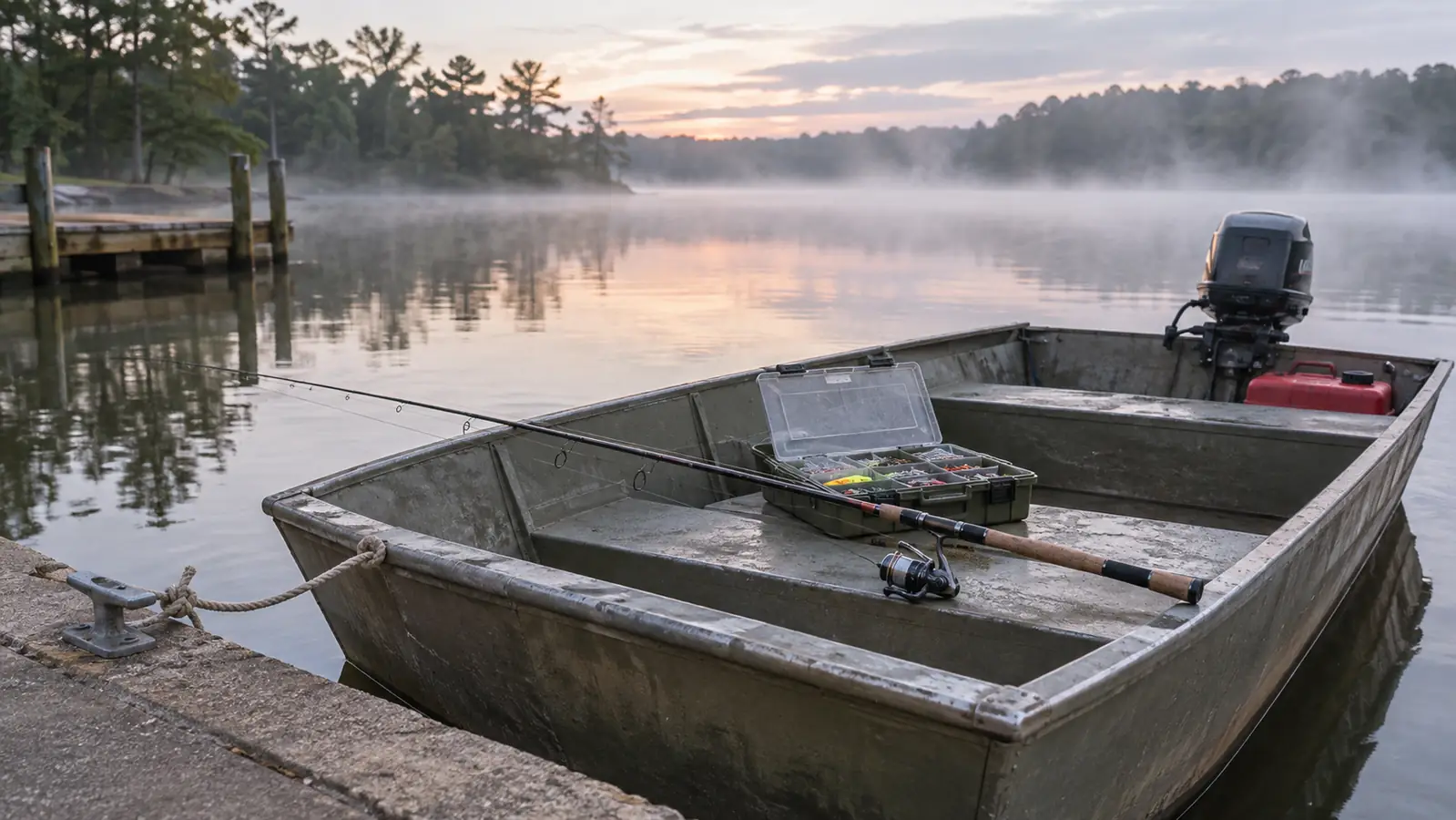
I bought the kit last spring for two jobs. First, a spare in the 16-foot aluminum jon boat for crappie and panfish, fishing light line and small jigs around brush piles and dock pilings. Second, a rod behind the seat of the truck for the pond I pass on the way home and the creek that runs behind the hardware store. Both jobs want the same three things: something short, something I do not have to baby, and something that is not a project to get ready.
The two-piece 5-foot blank is what makes it work. Broken down it lies flat behind the truck seat with room to spare, next to a jumper cable and a pair of work gloves that have been there since I was still taking service calls. Put together it is short enough to cast from the front deck of the jon boat without hooking the trolling motor on the back cast, which is a real problem with the 7-foot rods I use on Lake Norman. It also means a friend can fish from the middle bench without me worrying about a rod tip meeting an outboard cowling.
Now the part I did not expect. The first several trips, I kept leaving it in the truck. I had it in my head that a 5-foot rod was a toy, and I would rather carry the 7-foot medium spinning rod even for crappie. So the kit sat there most of April. What changed my mind was a morning on the upper end of the lake when I broke off a jig on a dock piling and had nothing else rigged. I grabbed the Ugly Stik, tied on a new jig in gray light, and fished the next two hours with it. Three good crappie, no tangles, no fuss. After that it stopped living in the truck and started living on the deck.
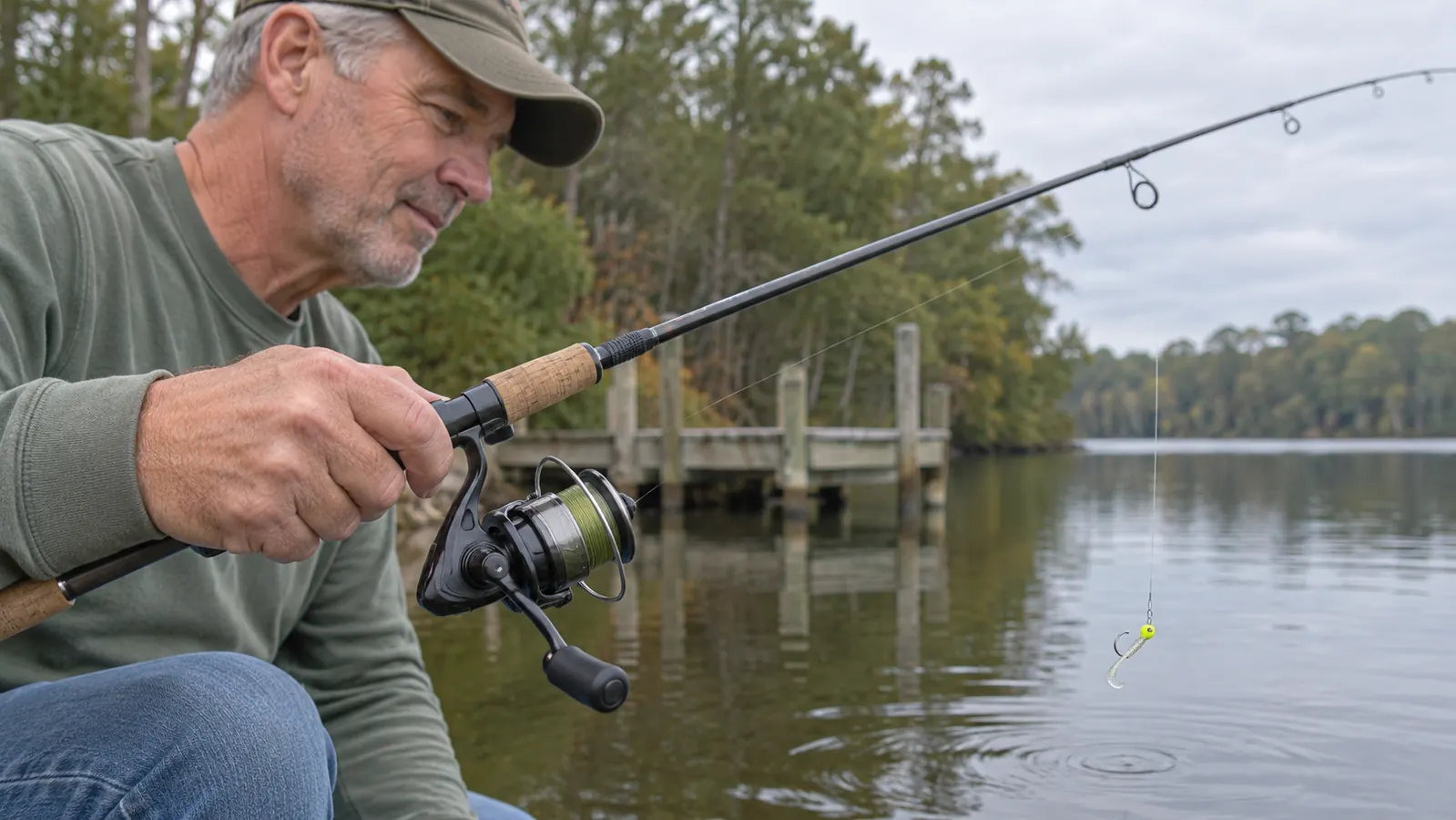
Most of its work has been crappie and bluegill, with a few small bass mixed in. I spooled it with 6-pound mono because the reel is rated to hold 240 yards of it and the rod is rated for 10-pound line, so 6 sits comfortably inside both numbers. That is a light setup and it fishes like one. A 1/16-ounce jig loads the tip on a short cast, and a worm under a small float lobs easy. I have also fished it from the bank at the neighborhood pond, where a 5-foot rod is about all the room you have between the benches and the duck feeder.
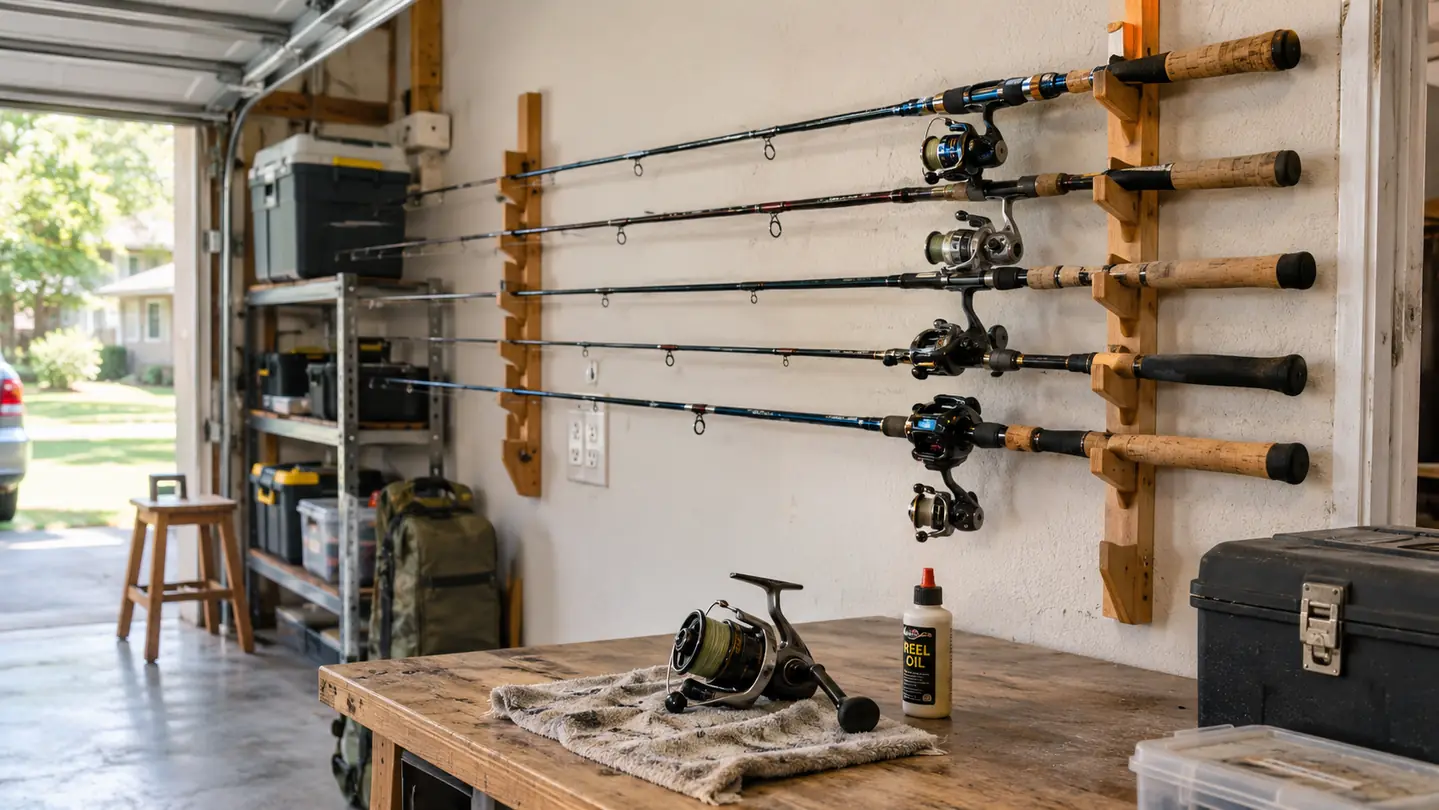
The rest of the time it does guest duty. My grandson Tyler fishes with me some Saturdays, but he has his own push-button rod that he picked out and he is not giving it up. That rod and this one hang on the same rack in the garage, which is where everything ends up after a trip gets rinsed and hung to dry. Having a second spinning rod rigged and ready means I am not rerigging a 7-foot rod at the ramp while the light is going.
What the Specs Actually Tell You
Strip out the label and here is the whole package: a 5-foot two-piece rod rated light power, a spinning reel with a 5.2:1 gear ratio, line capacity of 240 yards of 6-pound mono, a 10-pound line weight rating, ambidextrous hand orientation, 16 ounces for the rod and reel together, freshwater target species, and a manufacturer's warranty. That is the list. There is no spare spool, no tool kit, no extras in the box.
The number I checked before I bought it, and the one I would tell you to check, is the weight. Sixteen ounces for the rod and reel together is light enough that I forget it is in my hand by mid-morning. On a rod I plan to hold and cast for two or three hours, that matters more than anything else on the label. A heavier combo wears your wrist down and you start resting the rod on the gunwale instead of fishing with it.
Light power is the number that matters most, and it is the one most people misread. It means a soft tip and a bend that runs a long way down the blank. For crappie, bluegill, and small bass, that is exactly right. It lets a light jig load the rod on a short cast, and it keeps 6-pound line from popping when a fish surges at the boat. It also means you cannot horse anything. A two-pound bass bent this rod past the middle and I had to let her run twice before I got her alongside. That is the trade. A softer rod is more fun on small fish and less capable on big ones, and no amount of technique changes that.
The 10-pound line rating and the 240-yard capacity set your ceiling before you ever tie on. I would not run heavier than 8-pound on this reel, and the rod is happiest at 6. If you plan to fish flooded timber or throw big swimbaits, the specs tell you this is the wrong tool before you spend a morning finding out.
The 5.2:1 gear ratio is a moderate retrieve. The spool turns 5.2 times for each turn of the handle, slow enough to crawl a small jig along a brush pile and quick enough to take up slack when a fish turns back at you. I have faster reels set up for bass fishing and I do not want one of those here, because a fast retrieve makes it too easy to pull a light jig straight out of the strike zone. The hand orientation is listed as ambidextrous, which matters more than it sounds on a rod that gets handed around. When somebody borrows it, you are not explaining anything.
The Reel: Where a Cheap Combo Usually Falls Apart
On most combos in this range the rod is fine and the reel is the part you end up replacing. This one is no exception. The reel works. It has worked through seven months of two or three mornings a week. It is just not the part I would pay for.
What I notice at this point: there is a little play in the handle that was not there in April, and the whole reel feels looser than it did new. I rinse it with fresh water after every trip and put a drop of reel oil on it once a month, same as the rest of my reels, and that routine has kept it usable. Line lay is even enough that I am not fighting loops and wind knots, which is the failure I have had with cheaper reels before this one. That alone puts it ahead of some things I have owned.
I have had reels in this range where the drag washers went slick after a season and the anti-reverse started slipping on a hookset. That is the failure that costs you fish. This one has not done either. It is loose in the handle and it feels its age, but it still does the three things a reel has to do: hold line, let line out when a fish pulls, and take it back up when you crank.
When a fish runs, line comes off the spool the way it should instead of locking up or chattering. Low bar, I know. Plenty of bargain reels fail it anyway. What I would not do is fish this reel in salt water or put it on a rod I actually cared about. The listing calls it a freshwater rig and I believe it.
Performance After Seven Months
The rod is the surprise. I expected the finish to go first, or the tip to take a set from living in a hot truck cab through a North Carolina summer. Neither happened. The blank is still straight, the two-piece joint still seats tight with a quarter turn, and nothing has worked loose where the reel mounts.
I want to be straight about that joint, because it is where cheap rods give themselves away. On some, the ferrule works loose after a few trips and the top half starts twisting under a load. I check mine every trip out of habit, and seven months in it still seats with a quarter turn and stays put through a full cast. I wipe the male end with a rag before I put it together, which is the same thing I do with every two-piece rod I own, and I think that is half of why it has lasted.
The best morning I have had with it came on the Catawba below the dam in late summer, working a small jig along the rock on the edge of the current. I caught a mixed bag of panfish and one channel cat that had no business on 6-pound line, and the rod handled all of it. The cat took its time. The rod bent deep and I let the fish run when it wanted to run. That is what a light rod does well: it protects light line from a fish that is bigger than the tackle.
What has worn is cosmetic. There are scuffs on the blank from riding behind a seat next to a toolbox, and the reel has that dull look that comes from being rinsed a hundred times. Nothing that affects fishing. I have respooled it twice and that is the only maintenance beyond the oil.
It is not magic on a windy day. Six-pound mono on a 5-foot rod will throw a loop if you get sloppy, and the short blank gives you less room to correct a bad cast. Slow down, let the rod load, and it behaves. Rush it and you will spend five minutes picking out a bird nest on a reel that has no business bird nesting.
What It Does Not Do
It will not cast far. A 5-foot light-power rod throwing a 1/16-ounce jig is a short-range tool, and into a headwind it is shorter than that. If the fish are set up out past that range, this rod is not reaching them and no amount of muscle fixes it.
It will not handle heavy cover, big baits, or big fish on purpose. The 10-pound line rating is a real ceiling. I would not throw it under a dock full of brush and expect to win the argument.
And it will not replace a good reel. If you already own a spinning reel you trust, the honest move is to buy the rod and mount what you have. Otherwise plan on this reel graduating to guest duty in a year or two while the blank keeps working.
What I Liked
- 5-foot two-piece blank stows behind a truck seat and casts from a small boat without catching the trolling motor
- Light power is honest to the spec and makes small jigs and panfish genuinely fun
- Rod is still straight and the joint still tight after a summer in a hot truck cab
- 16 ounces for rod and reel, light enough to fish all morning without noticing it
- Rated line weight and line capacity leave no guesswork about what to spool
Where It Falls Short
- The reel is the weak link, with handle play showing after seven months
- Short length and light power limit casting distance
- 10-pound line rating rules out heavy cover and big baits
- Freshwater only, so it stays home on a saltwater trip
- Nothing extra in the box, no spare spool, no tools
Seven months, two or three mornings a week, and the only thing I have replaced on this combo is the line.
Who This Is For
This is for the angler who wants one combo that lives in the truck or the boat and is ready when the trip was not planned. Crappie and panfish around brush and docks. Bluegill at a neighborhood pond. Small bass in a creek. A guest rod for the friend who shows up without one, or the family member who fishes twice a year and does not want to hear a lecture about gear.
It suits the jon boat fisherman specifically. Five feet of rod in a 16-foot aluminum boat is a different experience than seven, especially from the front seat with a trolling motor behind you and somebody on the middle bench. If your boat is small and your trips are short, the dimensions are the argument, and this kit is one of the cheaper ways to find out whether a short rod works for you.
Who Should Skip It
Skip it if you fish heavy cover, throw big baits, or chase big fish on purpose. The line rating and the light power will stop you before the fish do, and you will blame the rod for a decision you made at the shelf.
Skip it if the reel is the part you care about, or if you fish salt water, or if you want one rod to do everything. Buy the rod alone, or save your money and buy one combo with a reel worth keeping. The Ugly Stik kit is a good spare. It is not a good only rod.
A spare combo that earns the space behind the seat
Rated light power, 10-pound line, 240 yards of 6-pound mono, 16 ounces for the pair. Seven months of mornings later, the rod is still the reason to buy it.
Amazon Check Today's Price on Amazon →