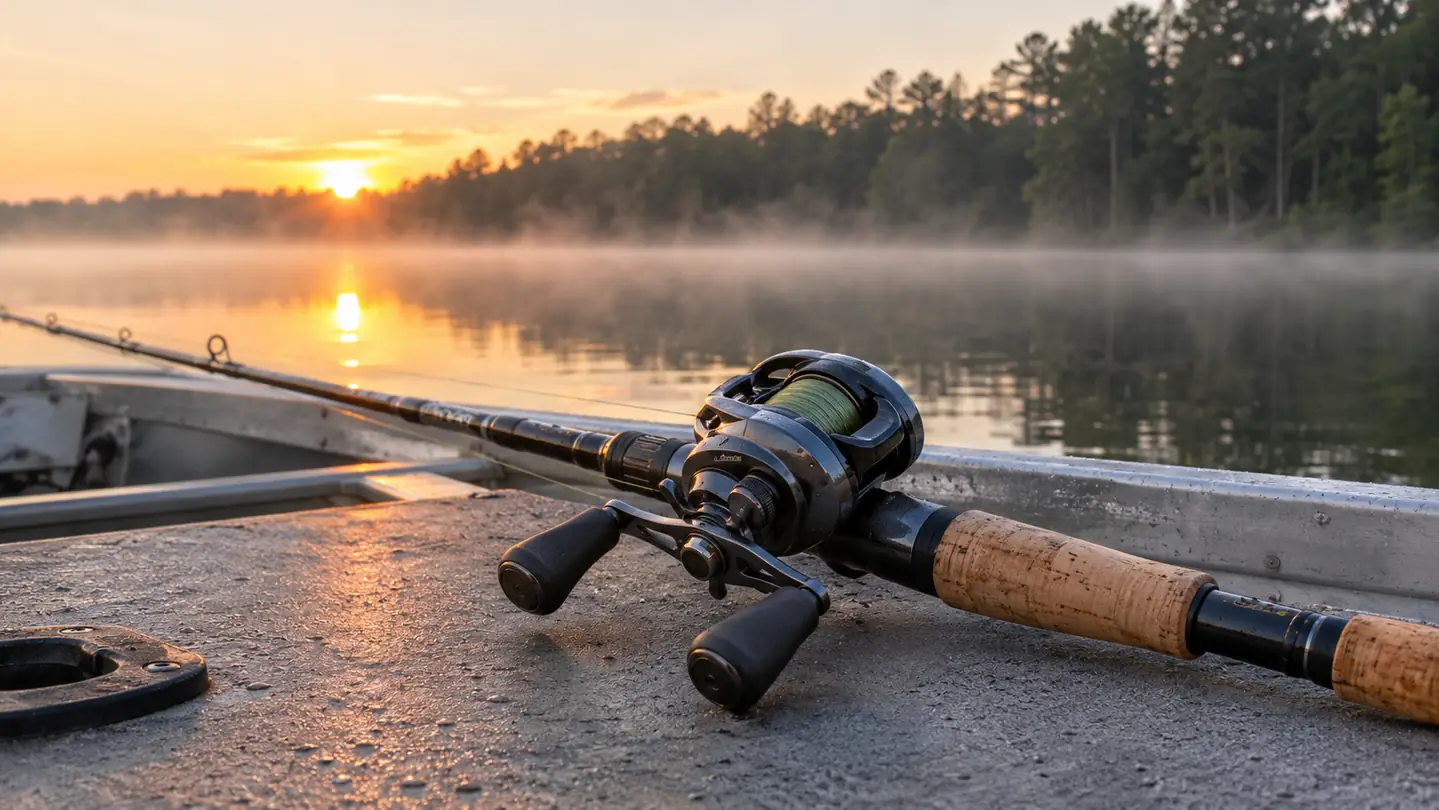
The first baitcasting reel I owned cost me a whole morning on Lake Norman and produced exactly one fish. The rest of the time I stood in the jon boat with my thumb on a spool, pulling loops of line out of a bird's nest while the shad blew up on a point I could not reach. I quit on it and went back to spinning gear for two years. Then this past summer the old baitcaster on my shelf finally seized up, and I bought a Piscifun Torrent to replace it, mostly because I did not want to spend much on a reel I might hate all over again.
Five months later it lives on a 7-foot medium-heavy casting rod in the garage rack and goes out two or three mornings a week. I am not going to tell you it catches more fish. It does not. What it does is let you do a handful of things a spinning reel cannot do well, and those things are worth the two or three trips it takes to learn. Here are ten of them, roughly in the order I noticed them.
The reel I bought to replace a dead baitcaster and never regretted
Right-hand retrieve, 7.1:1, magnetic brake, 18 pounds of drag, 8 ounces on the rod. Five months on Lake Norman and it still turns like the day I spooled it.
Amazon Check Today's Price on Amazon →Your thumb becomes the brake, and that is where the accuracy comes from
A spinning reel stops where the lure runs out of speed. A baitcaster stops where your thumb tells it to. That sounds like a small thing until you are throwing at a dock post with the trolling motor on low and the boat drifting. I can drop a weightless Senko a foot from the post now. Two years ago I would have landed it six feet past and dragged it back through water I had already fished. The magnetic brake on the Piscifun keeps the spool from overrunning, but the accuracy is yours, not the reel's, and it takes a few trips before you trust your own hand.
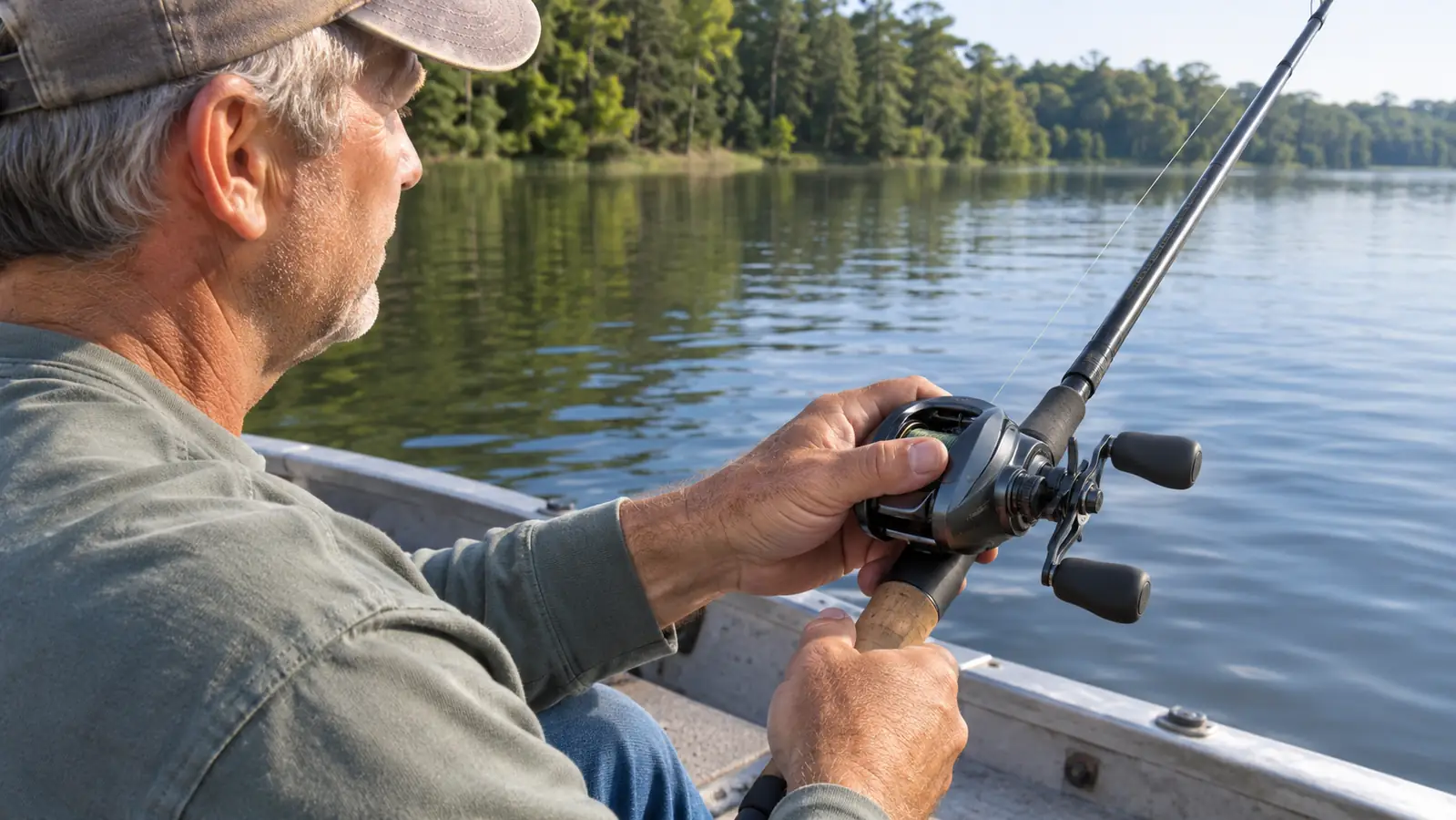
7.1:1 gearing picks up 30 inches of line every turn of the handle
Thirty inches per handle turn is the number that matters when a bass hits close to the boat and swims at you. With a slow reel you crank as fast as you can and still lose ground. With this one you take up the slack in a couple of turns and get back in contact with the fish. It also means you can burn a spinnerbait just under the surface when the shad are up, then slow down and drag a worm without changing rods. I noticed it most on the days when fish were following and not eating. Speed gets you a reaction.
18 pounds of drag is more than a lake bass will ever need, which is the point
The drag rating on this reel is 18 pounds, far more than you will ever use on a largemouth. You are not buying drag for the fish you catch. You are buying it for the fish you hook in grass and have to turn before it wraps you. I keep mine set lighter than the rating and let a good fish run, but there is plenty in reserve when I need to lean on one. Five months of use and the drag still starts smooth instead of grabbing, which is more than I could say for the reel it replaced.
It weighs 8 ounces, and you feel that by the third hour
Eight ounces does not sound like anything until you have held a rod out in front of you for three hours pitching plastics at docks. The heavier casting reels I have owned made my wrist tired by mid-morning. This one does not. It sits on my 7-foot medium-heavy rod well enough that I forget which end is heavier, and I have fished it two or three mornings a week since July without thinking about the weight once. Light reels stop being a luxury when you are 58 and fishing standing up in a jon boat.
Six bearings and a smoother feel when something is pulling back
The listing says six bearings and claims a smoother feel under load than a single-bearing supported system, which is the kind of line I usually ignore. What I can tell you is that the handle turns cleanly when a fish is pulling, not just when the spool is empty in my garage. That is where cheap reels show themselves. They feel fine until something fights them. Mine has been in the boat since summer, rinsed with fresh water after every trip and oiled once a month, and it turns the same as the day I spooled it.
The reel did not make me a better fisherman. It made me a more accurate one, and on Lake Norman most mornings that is the same thing.
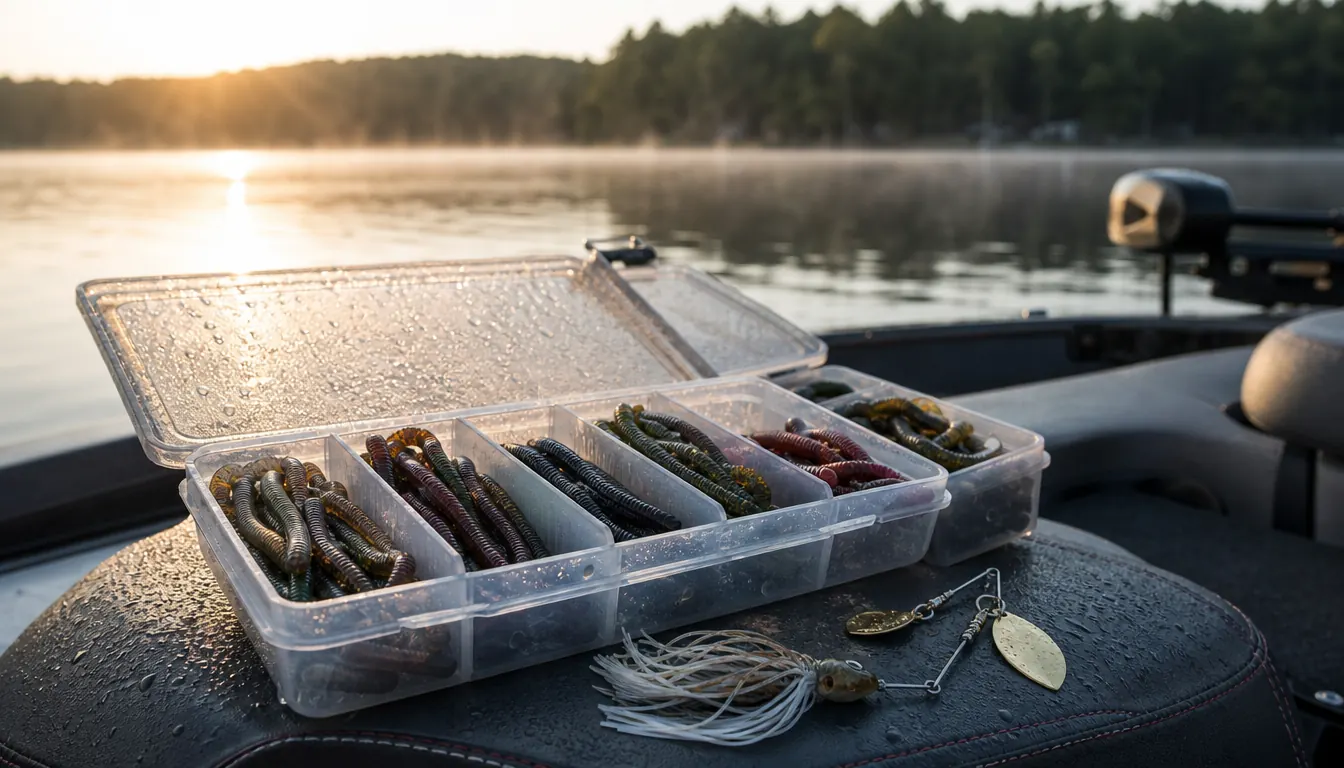
One reel covers soft plastics and spinnerbaits, so you carry less
I bought the 7.1:1 right-hand model. It is fast enough to burn a spinnerbait and slow enough, if you reel like a human being, to drag a Texas-rigged worm through a brush pile. Piscifun also builds a 5.3:1 version for crankbaits and slower presentations, and if I threw deep divers all day I would own that one instead. For the way I fish, plastics and spinnerbaits and the occasional chatterbait, one reel does the whole job. That was not true of the two reels I used to carry, and my boat seat is better for it.
Line capacity that covers everything Lake Norman asks of you
The spool takes 120 yards of 10-pound mono or 120 yards of 30-pound braid, and I run braid with a fluorocarbon leader. That is more line than any cast I make on this lake. If a bass strips 40 yards off me, I made a mistake somewhere else in the chain. Having the capacity matters less for distance than for confidence, because you are not worrying about getting spooled by a fish you hooked in the grass. Check the line on the spool every few trips and re-spool when it starts looking tired.
The brake forgives a headwind cast, which is most of September
Late summer on Lake Norman the wind comes up around nine and stays. A baitcaster set wrong will punish you for casting into it. Mine is set a setting or two heavier than I use in calm water, and I have not had a backlash I could not pick out in under a minute in two months. It is slower than a spinning reel in a hard wind, that is honest, but it is not the disaster people warn you about. The first two trips are the price of admission. After that your thumb learns and you stop thinking about it.
A three year manufacturer warranty changes how you treat the thing
Three years. I have owned reels with ninety days and thrown them away inside one season. Knowing the warranty is there does not change how the reel fishes, but it changes how you feel about setting it down on a wet deck or knocking it off the gunwale. My last baitcaster died of nothing in particular after two seasons of light use, and I never did figure out why. This one has five months on it and no complaints. If it quits in year two, I am not out shopping again.
The skill carries over to every casting reel you buy after it
This is the part nobody mentions. Learning to thumb a spool is not about this reel. It is about the next one and the one after that. Once you can cast a baitcaster without thinking about it, every casting reel on the shelf opens up to you, including the ones you would have to explain to your wife. I spent two or three trips fighting this thing and now I can pick up any baitcaster and cast it. That is a one-time cost for a skill you keep. If you are going to learn, learn on something that does not fight you.
What I'd Skip
Two things. First, skip the urge to load the spool with cheap heavy mono while you are learning. Backlashes on stiff line cost you ten minutes instead of one, and you will quit before the thumb ever learns anything. Second, skip the idea that you need to cast as far as the reel allows on day one. The bass I catch are inside twenty yards, most of them inside ten. Practice short, accurate casts in the driveway with a practice plug before you ever put it in the boat. And if you honestly only fish once a month from the bank, a spinning reel will do everything you need with less aggravation. Baitcasters reward people who fish often enough for their thumb to stay trained. That is the honest trade, and nobody at the ramp will tell you otherwise.
Five months, one backlash-free month, and it still lives on the rod
Right-hand retrieve, 7.1:1, magnetic brake, 18 pounds of drag, 8 ounces, three year manufacturer warranty. Rinse it, oil it once a month, and it will outlast the rod it sits on.
Amazon Check Today's Price on Amazon →