
Short answer first, because that is what I would want from a man at the ramp: a baitcaster is not a better reel than a spinning reel. It is a more precise one, and precision charges you two or three trips of your patience before it pays anything back. I fish a Piscifun Torrent on a 7-foot medium-heavy casting rod for bass on Lake Norman, and I fish a spinning outfit the rest of the week for crappie, panfish and catfish, and I would not give up either one. The Torrent earns its spot when I need to drop a soft plastic beside a dock post and stop the lure exactly where I aimed it. The spinning reel earns its spot every single time the wind picks up or the lure gets too light to throw with a thumb.
I bought the Torrent this past summer to replace a baitcaster that had finally worn out on me. Right-hand retrieve, 7.1:1, magnetic brake, 8 ounces, 18 lb carbon drag, six bearings. It went onto a rod I already owned, which is the sensible way into baitcasting if the casting rod is already hanging in your garage. About five months on it now, fished two or three mornings a week plus most Saturdays, rinsed with fresh water after every trip and a drop of reel oil once a month like everything else on my rack. It took me a few trips to dial the brake in and stop the backlashes. That part gets its own section further down, because it is the part nobody tells you straight.
| Piscifun Torrent | Spinning reel (3000 size) | |
|---|---|---|
| Learning curve | Two or three trips of picking out backlashes before it settles down | Spool it up and be fishing the same afternoon |
| Backlash risk | Magnetic brake has to be reset whenever you change lure weight | No overrunning spool, so no bird nests |
| Accuracy at close range | Thumb on the spool lets you stop the lure on a dime beside a dock post | Doable, but you are feathering the spool lip with a finger |
| Light lures | Happiest with heavier baits, light lures punish a sloppy thumb | Handles small jigs and light lures without complaint |
| Wind | A crosswind with a light lure is where the brake earns its keep and your thumb earns a cramp | Noticeably less fussy when it blows |
| Drag | 18 lb carbon drag, enough to turn a bass out of a brush pile | Smooth and forgiving on light line, not built to horse a fish out of cover |
| Line capacity | 120 yards of 10 lb mono or 30 lb braid | A deeper spool, which matters if something big ever runs |
| Retrieve | 7.1:1, 30 inches of line per turn of the handle | Lower ratios are easy to find, better for creeping a jig |
| Weight | 8 ounces | Comparable, and it hangs under the rod so it balances differently |
| Hand orientation | Right-hand retrieve in the 7.1:1 model I own | Left or right handle, your pick, in most sizes |
| Warranty | Three years from the manufacturer | Varies by brand, so read the fine print |
| Best for | Bass with soft plastics and spinnerbaits around cover | Crappie, panfish, light jigs, and any morning the wind is up |
Where the Piscifun Torrent Wins
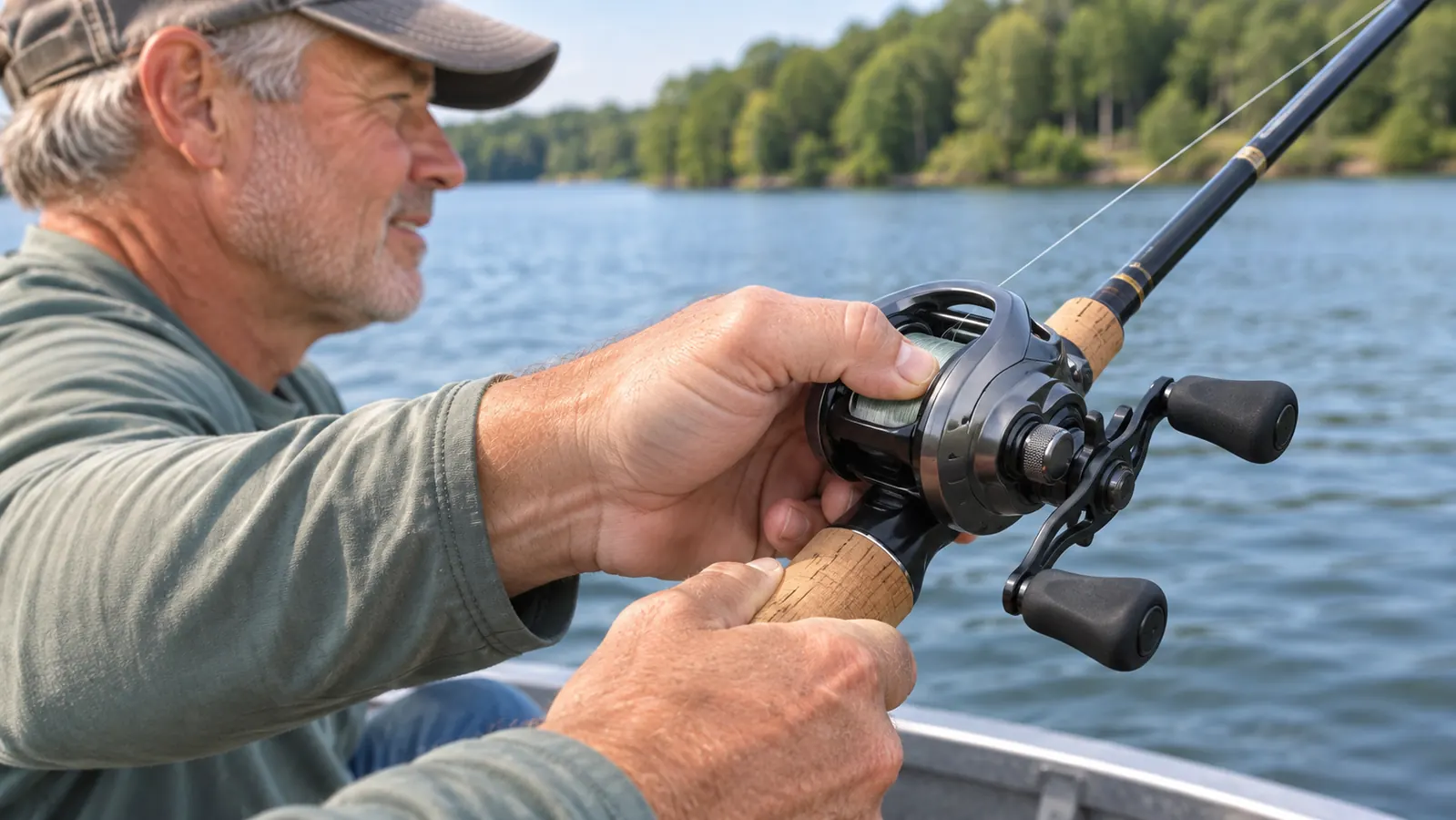
Accuracy at short range is the whole reason I keep it strung up. With a spinning reel, when you want the lure to stop short, you flip the bail or feather the spool lip with your free hand. That works, and I have done it for forty years. With a baitcaster your thumb stays on the spool through the entire cast, so you can kill the lure mid-flight and drop it into a gap the size of a dinner plate between two flooded stumps. On Lake Norman in summer, when the bass are tucked under docks and laydowns, that half second of control is the difference between fishing a spot and spooking it.
There is a dock on the west side of the lake, a floating one with a pontoon tied to it, where the water runs about six feet deep and the bass sit in the shade of the walkway. From twenty feet out, a spinning reel will get a soft plastic under there maybe half the time, and the other half you are picking the lure off the float or out of the pontoon rope. With my thumb on the Torrent spool I can put it under the walkway and stop it before it ever reaches the far pilings. I have caught fish out of that dock in August that I am fairly sure I would never have caught otherwise.
Drag and retrieve are the other two. The Torrent carries an 18 lb carbon drag, more than I need for a Lake Norman largemouth and about right when I want to turn one out of a brush pile instead of letting it bury me. The 7.1:1 gear ratio picks up 30 inches of line per turn of the handle, so a spinnerbait fished fast stays fast without my wrist complaining by ten in the morning. The whole reel weighs 8 ounces, light enough that I am not thinking about it four hours in. And it is a simple reel to live with: rinse it, oil it once a month, and it has not given me a reason to open it up.
Where a Spinning Reel Wins
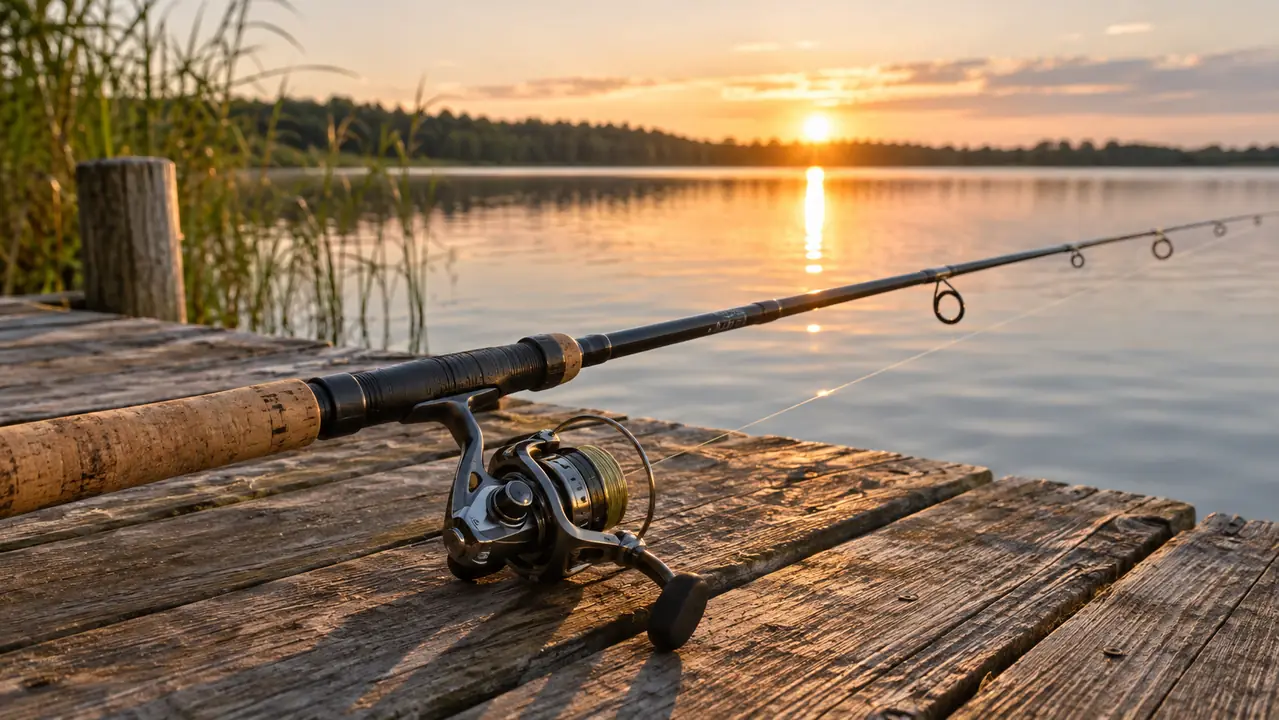
No backlash. That is the entire argument, and it is a good one. A spinning reel does not overrun, so it does not cost you ten minutes on your knees in the bottom of a jon boat with your thumbnail picking at a bird nest while the school you found moves off the point. I have had exactly one backlash on the Torrent bad enough to cut out. It was my fault and not the reel's, and it was still a twenty minute lesson that a spinning reel would never have taught me.
Wind and light lures are where I stop arguing altogether. A crosswind with a light lure is the worst case for any baitcaster, and no brake setting fixes it completely. My crappie fishing is small jigs on light line, and that is spinning gear, full stop. Anything under about a quarter ounce is the same story. The Torrent will throw it if my thumb is perfect. My thumb is not always perfect. In wind, the spinning reel is the tool that lets me keep fishing instead of picking.
There is a third thing, and it is quiet. A spinning reel does not ask me to think. Some mornings I am on the water before six with a cup of coffee going cold in the holder, and I want to fish, not manage a machine. Those are spinning mornings. Knowing that about myself is worth more than any spec sheet.
It took me three trips and one genuinely spectacular backlash before the brake setting stopped being a guess and started being a number I knew.
Five months in, and it is still the reel on my casting rod
Right-hand retrieve, 7.1:1, magnetic brake, 18 lb carbon drag, 8 ounces. The exact setup I fish on Lake Norman for bass with soft plastics and spinnerbaits.
Amazon Check Today's Price on Amazon →What the Learning Curve Actually Costs You
It costs a few trips, and it costs some line. That is the honest version. The first morning I had the Torrent on the rod, I set the magnetic brake heavier than it needed to be, because heavy brake means fewer backlashes and shorter casts. I fished that way for a trip and a half before I got tired of losing distance. Then I backed it off too far and spent a good ten minutes of a Saturday morning picking out a nest while Tyler asked me, twice, why I did not just use my other rod.
What fixed it was doing the boring thing. I picked one lure, a half ounce Texas rig, and I threw it in the yard instead of on the water until I could cast it without touching the brake. Then I switched to a spinnerbait and reset the brake for the new weight. A baitcaster does not care what worked yesterday with a different lure. Once I understood that the brake is a setting you adjust when the lure changes and not a setting you find once and forget, the backlashes went from several a trip to maybe one a month, and the one a month is always when I get careless.
That was the last week of July, and I want to be honest about how long it took. I spent maybe three evenings in the yard with that half ounce Texas rig, fifteen or twenty minutes at a time, before I took the brake setting back to the water. Between those evenings and the two bad trips before them, call it three weeks of not-quite-fishing before the reel stopped being the thing I was thinking about. That is the real cost of a baitcaster. Not money. Attention.
What I Liked
- Thumb control puts a lure exactly where you aimed it, which a spinning reel cannot match at close range
- 18 lb carbon drag turns a bass out of cover instead of letting it dig in
- 7.1:1 ratio picks up 30 inches of line per turn, good for moving baits
- 8 ounces, light enough to fish all morning without noticing it
- Three year manufacturer warranty, and I have not had to use it
- Simple maintenance: fresh water rinse, a drop of oil monthly
Where It Falls Short
- Backlashes happen, and a bad one costs you ten minutes and some line
- The magnetic brake has to be reset every time you change lure weight
- 120 yards of 10 lb mono or 30 lb braid is thin if something big runs
- The 7.1:1 model I own is right-hand retrieve only
- Light lures and crosswinds are still a fight, brake setting or not
The Brake Is the Whole Conversation
Anybody who tells you a baitcaster is easy is either selling one or has forgotten their first month. The magnetic brake on the Torrent is the part that decides whether your morning goes well. Set it too high and you are casting into a headwind you created yourself. Set it too low and the spool keeps turning after the lure has stopped, and that is exactly where the nest comes from. The right setting is the lowest one where your thumb can still catch the spool at the end of the cast.
The other half of it is your thumb, and there is no setting for that. You learn to feather the spool on the way out and stop it just before the lure touches down. That is a feel, it takes repetition, and it is the same feel that later lets you slide a bait under a dock in a way that is genuinely harder with a spinning reel. The brake buys you forgiveness while your thumb learns the job. After five months I run the brake lighter than I did in July, because my thumb does more of the work now and I want the distance back.
On the Torrent the brake is magnetic, and what I ended up with was a routine rather than a number. I tie on the lure, hold the rod out, and let the lure drop to the deck while my thumb hovers over the spool. If the spool keeps turning after the lure lands, the brake is too light. If the lure barely falls, it is too heavy. The whole check takes fifteen seconds, and it has saved me more line this year than any other habit I picked up.
What Five Months on Lake Norman Taught Me
The Torrent has not made me a better fisherman. It has made me a more deliberate one. When you know a sloppy cast costs you ten minutes, you stop making sloppy casts. I pick my targets now. I think about where the lure is going to land before I let it go. That habit carried back over to my spinning rods, and I fish those better than I did before, which is not the outcome I expected when I bought a baitcaster.
One morning in September makes the case better than I can. I was working a row of laydowns on the north end with a Texas rig, and there was a gap between two limbs about the width of a milk crate. My first cast with the spinning rod went into the outside limb and cost me the rig. I tied another, picked up the Torrent, and dropped it through the gap on the first try. Nothing big came out of that gap. But I put the bait where I wanted it, twice in a row, and that is the whole argument for the reel.
What I do not love, in plain terms: 120 yards of line capacity is plenty for bass on this lake and thin if something bigger ever takes it. The 7.1:1 model I own is right-hand retrieve, so if you crank with your left hand you need a different version. And it is a baitcaster, which means it will always ask more of you than the spinning rod leaning next to it in the rack. Five months in, I still reach for the spinning rod when the wind is up. I reach for the Torrent when I want to be precise.
Who Should Buy Which
Buy the Torrent if you already own a casting rod, you fish heavier baits for bass, and you want to put a lure in a specific place instead of a general area. If you fish docks and laydowns and brush, and it drives you crazy watching a good cast land two feet off target, a baitcaster is the tool that addresses that. It will charge you a few weeks first. The 18 lb drag and the 7.1:1 retrieve suit soft plastics and spinnerbaits on a lake like Norman, and the 8 ounce frame does not wear you out by lunch.
Stay with a spinning reel if you fish light jigs and small lures, if you fish in wind more often than not, or if you get out once a month and do not want to spend that one morning learning a new reel. A 3000-size spinning reel on a 7-foot medium rod is the most forgiving setup in fishing, and I say that as a man who likes his baitcaster. There is no shame in it. Half the boats at the ramp have one tied on, mine included.
If you already own the casting rod, this is the reel that makes it worth carrying
The Piscifun Torrent: 7.1:1, 18 lb carbon drag, magnetic brake, 8 ounces, three year warranty. Rinse it, oil it once a month, and learn your thumb.
Amazon Check Today's Price on Amazon →