Bluegill and crappie are not hard fish to catch, and that is exactly what trips people up. You can catch them on a bare hook and a worm, so a new angler figures the tackle does not matter much, buys a combo off the pegboard, spools it with whatever mono has been sitting in the garage since the last trip, and then spends a Saturday morning watching a small jig helicopter into a bird nest while the float sinks under line that is too heavy for it. Then they decide panfish are finicky. They are not finicky. The setup was wrong.
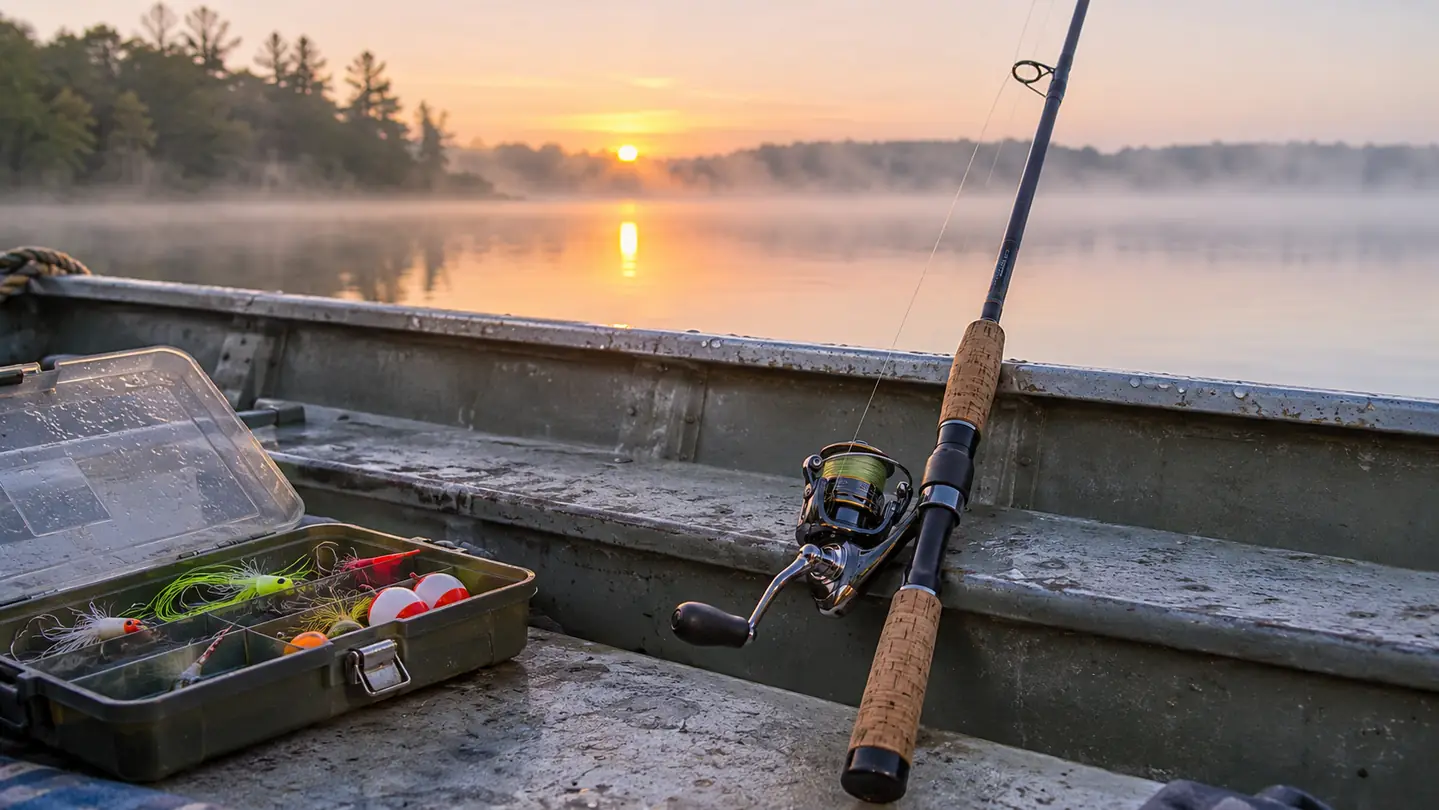
Here is what I set up instead. I keep an Ugly Stik 5 foot complete spinning kit as the spare combo in my 16 foot aluminum jon boat, and it rides behind the truck seat when I am fishing from the bank. I bought it last spring for crappie and panfish on light line with small jigs, and for whoever comes along without a rod. It is a two piece light power rod with a spinning reel on it, 16 ounces for the pair, and it has about seven months on it now. It is not fancy. It is the rig I hand to a friend, and it fishes well when I set it up right.
The spare combo that earns its spot behind the truck seat
Five feet, two pieces, light power, and a reel you can spool with 6 pound mono. That is the whole pitch for the Ugly Stik kit, and it is why one lives in my boat.
Amazon Check Today's Price on Amazon →What a Panfish Combo Actually Needs
Three things. Light line, a soft rod tip, and a drag that gives before the line does. That is the whole list. Everything past those three is preference, and most of the preference arguments on the internet do not put a single extra fish in the boat.
A 5 foot light power rod handles the rod part of that. The tip folds over when a six inch bluegill grabs a jig, so you feel the fish instead of dragging it, and the short length lets you flip a cast under a dock or a low branch without a two handed lob. The reel on the Ugly Stik kit is a 5.2:1 gear ratio with capacity listed at 240/6, which is 240 yards of 6 pound line, and the handle can be set up on either side. For bluegill and crappie that is more reel than the fish require, which is fine. A little margin keeps the drag smooth.
What you do not need is a long rod, heavy line, or a reel the size of a coffee cup. I have watched people fish for crappie with a medium heavy bass rod and 12 pound line and then complain the fish will not bite. The fish bite. The line is the size of a shoelace and the jig does not swim.
Step 1: Match the Rod to the Fish, Not to the Shelf
The Ugly Stik two piece in 5 foot light power is the right starting point for panfish from a small boat, a dock, or a bank. Two pieces means it breaks down and fits behind the truck seat or in the rod locker without me rearranging the boat. Light power means the blank loads with a small jig, and a 1/32 ounce jig is what I throw most for bluegill.
When you put it together, line up the guides before you seat the joint, then twist the tip section on with a firm push and check that the guides run in a straight line. A joint that is only half seated will work loose on the third cast and the tip section will turn. Wipe the male end with a cloth first if it is gritty.
Then the reel seat. Set the reel in the seat and tighten the collar down by hand until it stops, then give it one more snug turn. Check it again after an hour of fishing. Reel seats loosen, and a reel that shifts mid cast is how you get line under the spool.
If you fish left handed, or you are handing the rod to somebody who does, the handle on this reel moves to either side. Take the cap off the opposite side, back the handle out, and thread it into the other side. Do that at the bench and not on the water, because the small parts go over the gunwale.
Step 2: Spool It With the Right Line
Fill it with 4 or 6 pound monofilament. The rod is rated to 10 pound line, but that number is the limit of the blank, not a recommendation for panfish. Six pound is the practical ceiling for bluegill and crappie, and 4 pound casts a 1/32 ounce jig noticeably better when the wind is down.
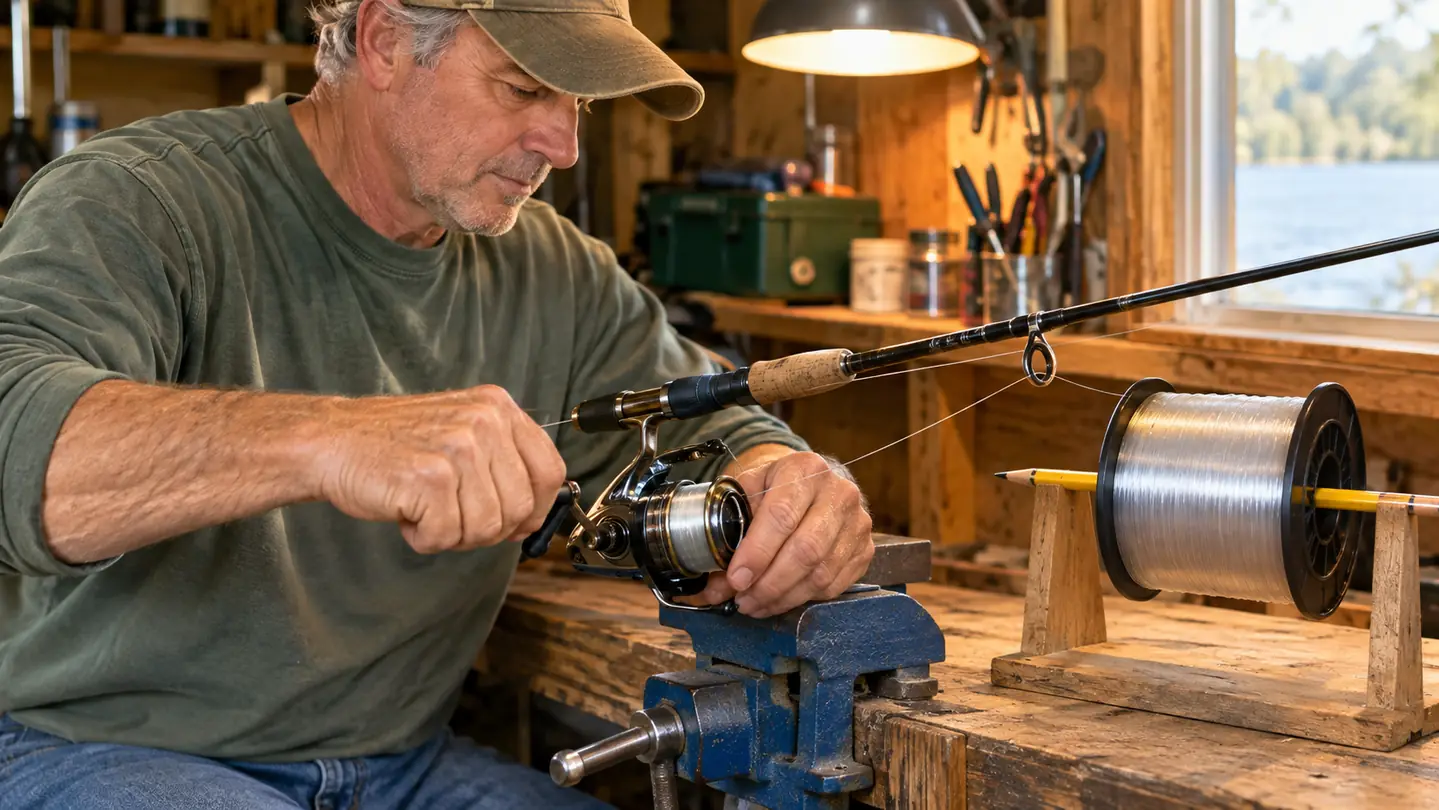
Spooling is where most people lose the day. Put the bulk spool on a pencil and have somebody hold the pencil, or clamp it so it turns. Run the line through the first guide, then tie it to the reel spool with an arbor knot. Crank slowly and keep tension with your free hand while you watch the spool. Fill it to about an eighth of an inch below the lip. Overfilled spools throw wind knots, and underfilled spools cost you the distance you paid for.
If the line has been in the garage for two seasons, throw it out. Mono takes a set and it takes heat, and a coil of old line will bird nest before your second cast. Fresh 6 pound mono is one of the cheapest things in fishing and one of the few that changes how the morning goes.
Watch for twist while you fill. If the line starts looping off the spool as you crank, the bulk spool is turning the wrong way. Flip it over and start again. Twist put on at the bench shows up as a tangled mess 30 feet from the boat.
Step 3: Build the Terminal End for the Fish You Are Actually Fishing
Three rigs cover nearly everything I do for panfish. A slip float with a 1/32 ounce jig under it. A plain jig cast out and counted down. And a split shot with a size 8 hook and a worm, which is what I fish with my grandson Tyler in the neighborhood pond when the bluegill are bedded up.
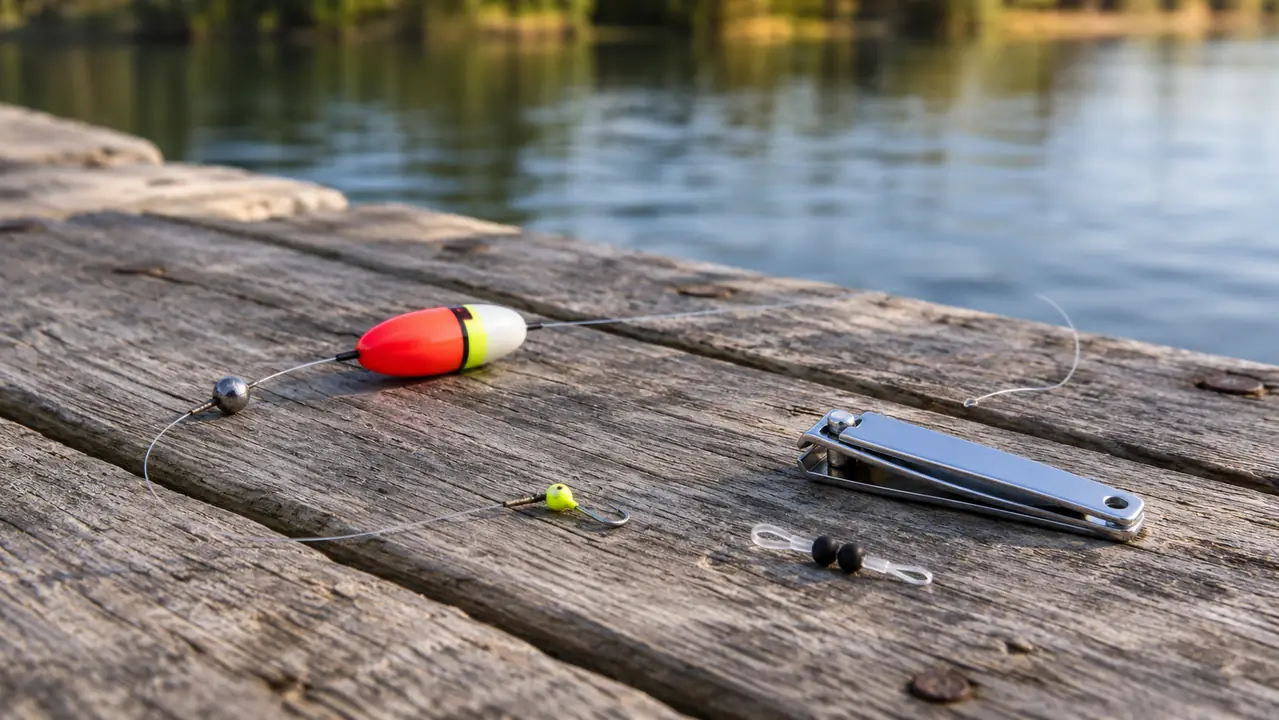
For the slip float, thread a small bobber stop on the main line, then the bead, then the float. Tie the jig on with an improved clinch knot, wet it, and pull it down snug. Trim the tag end close. A tag sticking out at an angle catches line on the cast.
Set the stop at the depth you think the fish are holding. Crappie suspend, so start shallow and move the stop up a foot at a time until you find them. Bluegill sit tighter to structure, so the float is less about depth and more about keeping a small bait parked in one place long enough for a fish to find it.
Add the smallest split shot that lets you cast the rig. Every extra pinch of lead makes the jig sink faster and kills the action. If you can cast it without lead, do not add lead.
Retie after every few fish, and always after a snag. The knot is the weak point on light line, and dock posts and small teeth both rough it up. I keep nail clippers on the same cord as my pliers and I use them more than anything else in the boat.
Step 4: Set the Drag Before the First Cast
Set it by hand, not by feel. Tie the line to something solid, back the drag off, and pull. Tighten the drag a quarter turn at a time until the line slips just before you think it will break.
With 4 pound line you want slip well under 4 pounds of pull. With 6 pound, a little more. Crappie have soft mouths and bluegill fight in circles, and a drag set tight will tear the hook out of a crappie lip or pop light line on the hookset. Neither of those is a fish story. Both are drag mistakes.
Check the drag again after a few fish, and again after the rod has sat in the sun. It creeps tighter. I back mine off completely at the end of the day and reset it the next trip. A drag that lives under tension for months gets sticky, and a sticky drag is worse than a loose one.
The other half of the drag conversation is your hand. On a light combo, do not lift the rod straight up to swing a fish into the boat. Lead it, keep the rod bent, and let the drag do the work it was set up to do.
Step 5: Fish It, Then Change One Thing at a Time
Take it out and fish it for 20 minutes before you change anything. If you cannot feel the jig on the fall, you are either using too heavy a jig or the line is not tight. If the cast falls short, check that the spool is not overfilled and that the jig is actually the weight you think it is.
Close the bail by hand after every cast. Snapping it shut with the handle puts a half turn of twist in the line, and 50 casts later you have a mess on the spool. This is the one habit that separates a light spinning combo that behaves from one that tangles.
Twist also shows up as the jig spinning on the retrieve. When it does, cut off 10 feet and retie. Do not fish through it and hope. Ten feet of monofilament costs nothing and the next cast is clean.
When you get home, rinse the reel with fresh water, back the drag off, and hang the rod on the rack in the garage next to the others. Once a month, one drop of reel oil on the handle knob and the bail. That is the whole maintenance routine, and it is the reason the Ugly Stik kit is still riding in the boat seven months in instead of sitting in a corner with a dry spool.
Two pieces, five feet, six pound line, and a drag you set by hand. That is a panfish rig, and it will out-fish a bass rod every morning of the week.
What Else Helps
A small box, not a big one. The whole appeal of a light combo is that you can pick it up and go, and a full size tray box defeats that. I carry a handful of 1/32 and 1/16 ounce jigs, four floats, a pack of bobber stops, two split shot sizes, a pack of size 8 hooks, and a few small soft plastics for crappie.
Nail clippers and needle nose pliers on a cord. You will retie more than you expect, and you will need to get a small hook out of a bluegill without tearing the fish up.
Polarized glasses. Crappie suspend, and you can spot them when the light is right and you can see past the surface glare. A hat with a brim helps more than another jig.
A small net if there is a kid in the boat. A six inch bluegill on a light rod is a good time for a 10 year old, and a net keeps the fish from swinging off the hook over the gunwale.
And a rod sock or a strap for the two pieces when the combo is riding in the truck. A two piece rod that knocks around loose in a bed full of gas cans and tackle will still cast fine, but the guides will not stay straight forever. Strap it to something and it lasts.
One more thing, and it is the one people skip. Put the whole setup together at the bench on a weekday evening, not at the ramp with the boat already backed down. Spooling, knot tying, and drag setting all go faster when your hands are not cold and there is no line of trucks behind you. Twenty minutes at the bench with the Ugly Stik kit on a clean surface buys you a calm first hour on the water, and calm first hours are the ones where you actually fish instead of fixing tackle.
Set it up once at the bench and it fishes all season
Five feet, two pieces, light power, 16 ounces with the reel on it. Spool the Ugly Stik kit with 6 pound mono and you have a bluegill and crappie rig you can hand to anybody.
Amazon Check Today's Price on Amazon →