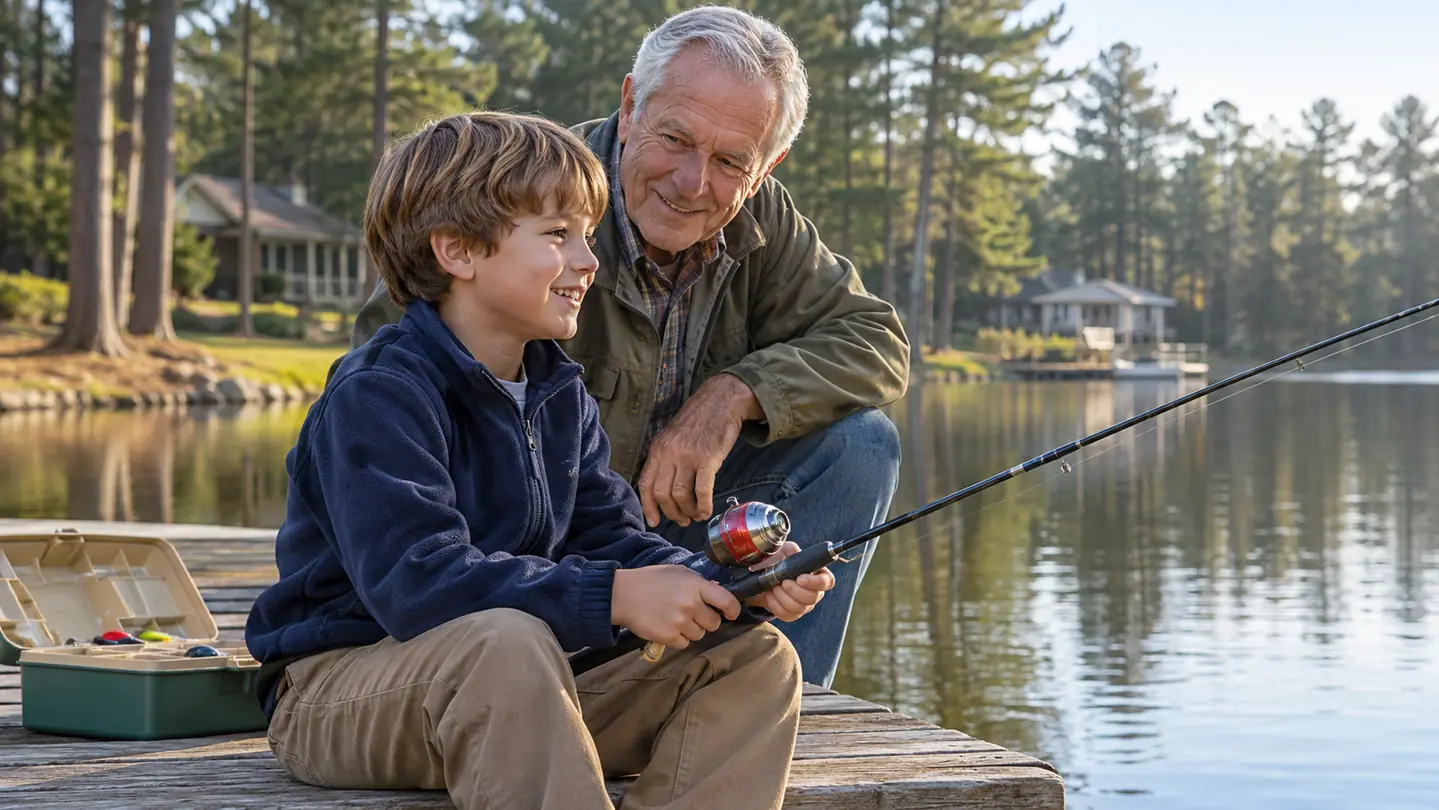
Tyler is ten, and he fishes with me some Saturdays. He likes the pond behind the neighborhood mailboxes because the bluegill are willing and the bank is flat. What he did not like, early this spring, was my spinning rod. He would open the bail, trap the line with his finger, swing the rod, and let go a half second late. The result was a bird nest in the spool and a kid who wanted to go home. I handed him the Zebco 33 spincast combo and the complaints stopped.
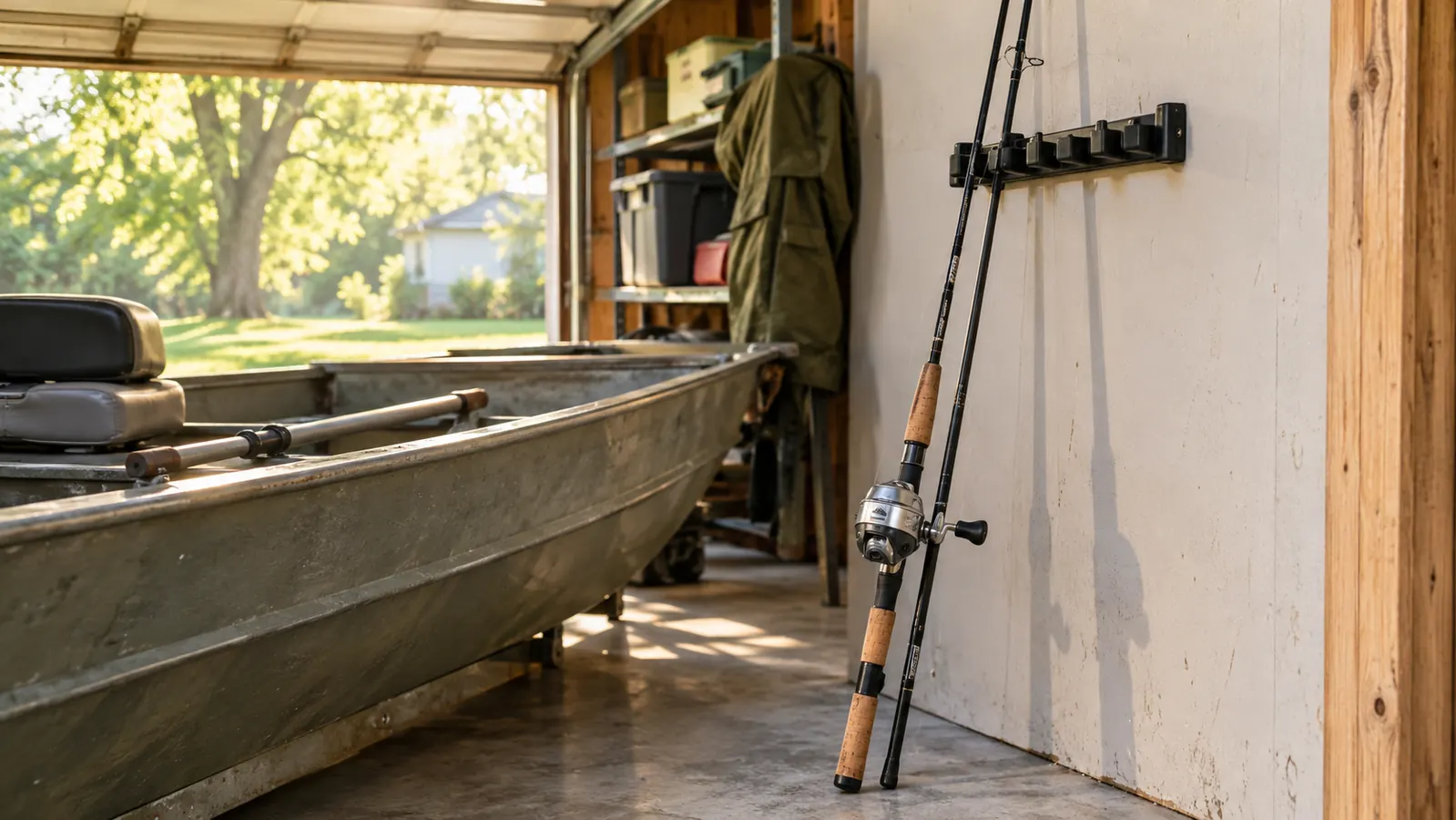
The Zebco 33 is a push-button spincast reel on a 5-foot 6-inch two-piece fiberglass rod. I bought it as Tyler's own rod, not as a spare. It hangs on the garage rack next to mine now, and he knows which one is his. We have used it about eight months at the pond and on calm mornings from the jon boat. I have cast it plenty myself, but it is his rod.
The rod a ten-year-old can cast without a timing lesson
The Zebco 33 spincast combo is a push-button reel on a 5-foot 6-inch fiberglass rod. Hand it to a kid and let the pond do the teaching.
Amazon See the Zebco 33 on Amazon →Here are ten reasons it works for kids and for adults who are new to fishing. None of them are about catching more fish. They are about spending less time fixing tangles and more time watching a bobber.
One button replaces the timing lesson
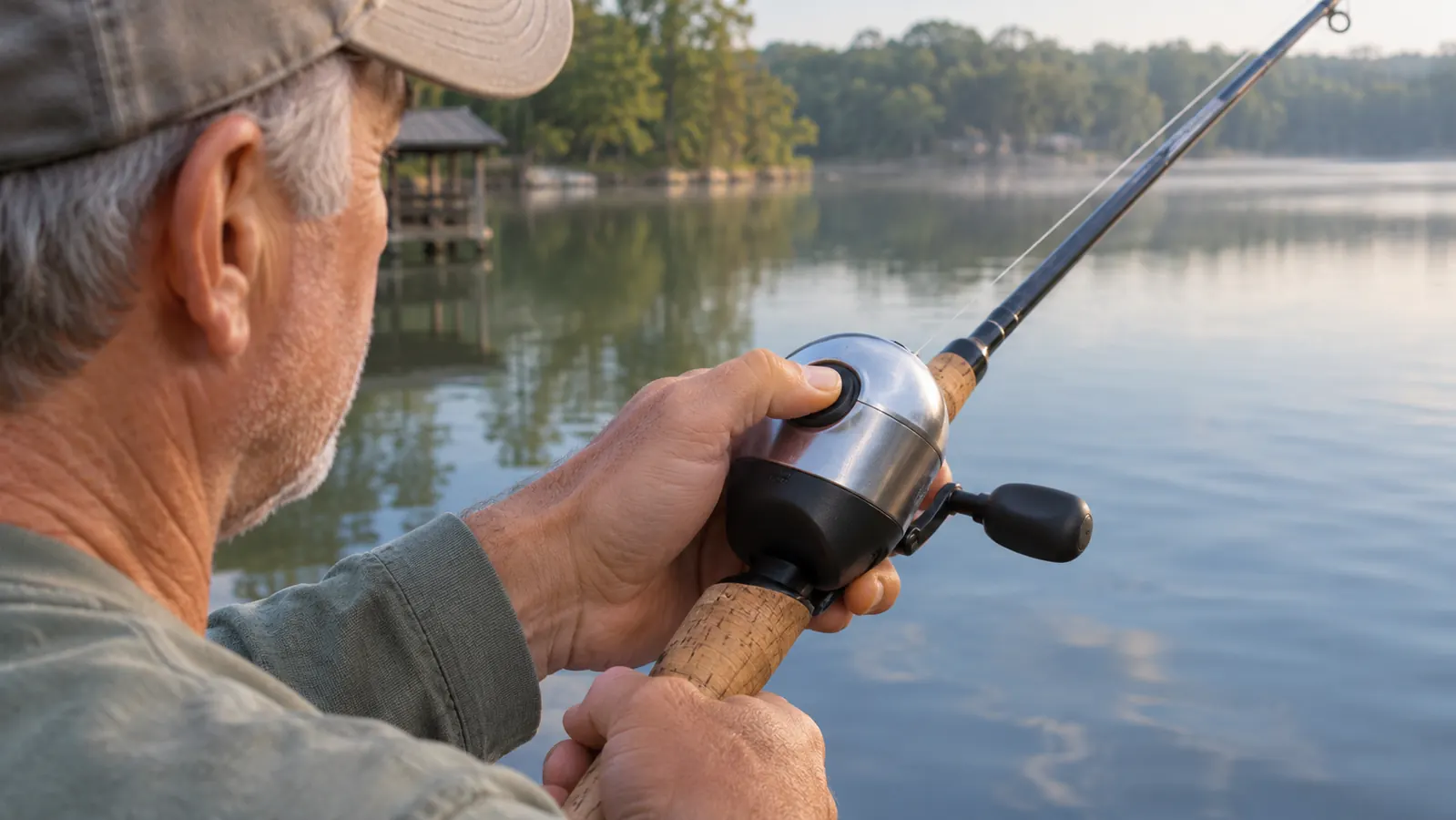
A spinning reel asks a beginner to open a bail, trap line with a finger, swing the rod, and release at the right moment. That is four things at once, and most kids miss one. The Zebco 33 asks for a thumb on the button and a smooth swing. Tyler learned it in about five casts. I still had to remind him to look behind him before he cast, but that is a safety habit, not a reel problem. The cast itself stopped being a negotiation.
The line stays put when the wind picks up
At the pond, the wind comes across the water in the afternoon and pushes a loose loop of line into a mess. A spincast reel keeps the line covered, so there is less for the wind to grab. I am not saying it never tangles. It does, usually when Tyler sets the rod down and walks away with slack line. But the tangles are fewer and easier to pick out than the ones he made with my spinning reel. Fewer tangles means more casts, and more casts means he stays interested.
The two-piece rod fits in the truck and on the rack
The rod is 5 feet 6 inches and breaks into two pieces. That matters with a 16-foot jon boat and a truck that already carries a tackle box, a net, and a cooler. It goes behind the seat or in the rod rack in the garage without hanging out a window. A kid can carry it from the truck to the bank without dragging the tip in the gravel. Tyler has learned to put the two pieces together and take them apart without pinching his fingers, which is its own small victory.
Bite Alert gives a kid something to watch
The reel has Bite Alert, which is a small clicker that tells you when line is moving out. Tyler watches the bobber, but he also listens. On a slow morning, that click is enough to keep him interested when the bluegill are not cooperating. I have used it myself on the Catawba when the catfish are picky and I want to set the rod in a holder and eat a sandwich. It is not a substitute for paying attention, but it helps a kid learn that a bite can be felt and heard.
Quickset anti-reverse stops the handle from spinning backward
When a bluegill takes it and Tyler lifts the rod, the handle stays put. That is the Quickset anti-reverse doing its job. On a cheap reel with a weak anti-reverse, the handle can spin back and crack a knuckle or spill line. The Zebco 33 has not done that to him. He sets the hook with a short lift, and the reel holds. For a beginner, that reliability matters more than a fancy drag system he does not know how to use yet.
Tyler learned the Zebco 33 in about five casts. The spinning reel took me a season to teach him, and he still wanted to go home.
A 4.1:1 gear ratio is slow enough to learn on
The 4.1:1 gear ratio retrieves line at a pace a kid can follow. A fast reel picks up slack before a beginner is ready, and the lure comes skipping back at the rod tip. This one lets Tyler feel the handle turn and see the lure move. For bluegill and small bass at the pond, that slow pace is right. It also means less line to untangle when the cast goes into the bushes. A slow reel is a patient teacher.
All-metal gears and ceramic pick-up pins hold up to pond duty
The reel has all-metal gears and dual ceramic pick-up pins. I do not pretend to know how long every reel will last, but I know what kills cheap ones: sand, dropped rods, and a kid cranking against a snag. The Zebco 33 has been dropped on the dock, laid in the bottom of the jon boat, and cranked tight more than once. It still casts and retrieves. I rinse it with fresh water after trips and put a drop of oil on it once a month. That is the whole maintenance routine.
The handle works for left or right handed kids
The reel is ambidextrous, so Tyler can crank with either hand. He is left handed and I am right handed, and neither of us has to switch anything. For a first-time angler, that is one less thing to think about. It also means the rod can be handed to a friend or a cousin without a tools-and-manual session on the bank. A kid should not have to figure out which hand is the correct hand before he can fish.
Ten-pound monofilament keeps line choice simple
The reel is rated for 10-pound monofilament. That is a simple line weight for a kid to learn on, heavy enough for a pond bluegill and light enough for small bass. I spool it with monofilament and check the line after every trip. If it gets twisted or nicked, I cut off a few feet. A beginner does not need a shelf full of line types. One weight, checked often, is enough. Tyler knows to tell me when the line feels rough, and that is a good habit to build early.
The fiberglass rod takes the knocks a kid gives it
The rod is fiberglass, not a thin graphite stick that snaps when a car door closes on it. Tyler has leaned it against the tailgate, stepped on the tip in the garage, and banged it against the dock post. It has a mark and it still works. I am not saying to abuse it. I am saying a first rod should survive a first season. This one has. The fiberglass also gives a slow, forgiving feel when a bluegill is wiggling on the end of the line.
What I'd Skip
Here is what I would skip for a kid or a first-timer. I would skip a baitcasting reel until they can cast a spincast without watching the reel. I would skip a long one-piece rod that does not fit in the truck or the garage. I would skip a spinning reel for a ten-year-old who is already frustrated, unless an adult is going to stand next to him and coach every cast. And I would skip any combo that is more rod than the kid is ready to take care of. The Zebco 33 is not a toy, but it is not a tournament rig either. It is a rod Tyler can own, rinse, and hang back on the rack.
Start with the reel that leaves the tangles to the adults
If you are handing a rod to a kid this weekend, the Zebco 33 spincast combo is the one I would buy again. Push-button cast, 5-foot 6-inch two-piece fiberglass rod, and a size 30 reel with Bite Alert and Quickset anti-reverse. Tyler has used his for about eight months. It is still on the rack.
Amazon See the Zebco 33 on Amazon →