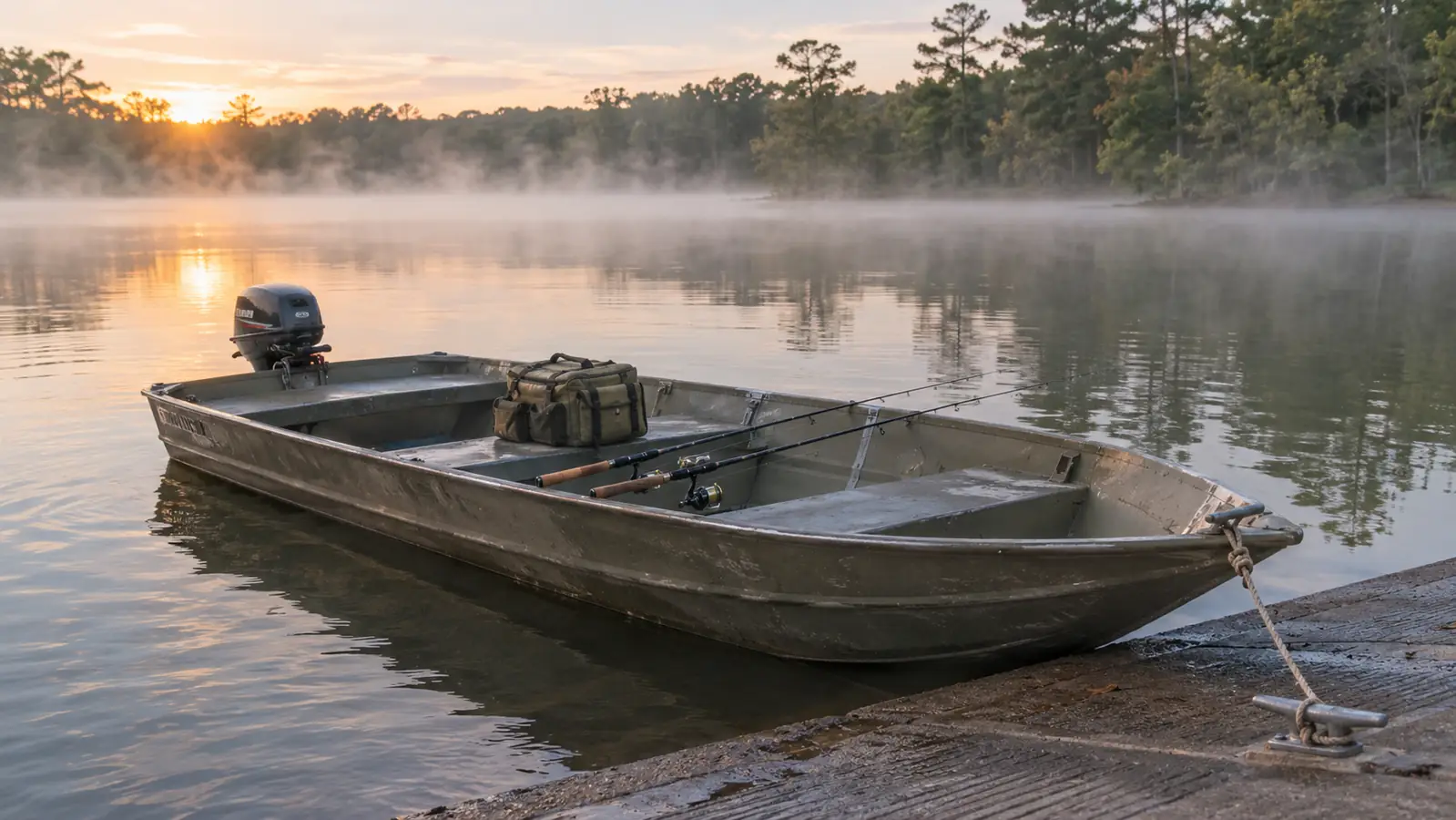
Tyler is ten, and last spring he decided he needed his own rod. That decision is why a Zebco 33 has been hanging on my garage rack for the last eight months, three slots down from an Ugly Stik spinning kit that has been riding in the jon boat nearly as long. Both are short. Both break into two pieces. Both are built for somebody who wants to fish, not fiddle. They are still not the same tool, and the difference shows up on the very first morning, when a beginner is the one holding it.
Here is the short version. If the rod is going to a kid, or to an adult who has never cast a line in his life, the Zebco 33 is the one I would buy again. The push button and the covered reel do more for a beginner than any number on a spec sheet. If the rod is going into a boat or behind a truck seat as a spare, and you already know how to cast, the Ugly Stik kit earns its spot, because a light power rod and a spinning reel will fish a small jig in a way the Zebco will not. I own both. I use them on different mornings, and I would not trade either one for the other.
| Zebco 33 | Ugly Stik 5' Kit | |
|---|---|---|
| Casting it on the first morning | Push button under the thumb, no bail to flip | Bail and a finger on the line take practice |
| Small jigs for crappie and panfish | 10-pound line and a rod with the power to match, so a light jig lobs | Light power rod built to load and cast a small jig |
| Bad casts and line loops | Closed reel cover keeps the line out of trouble | Open spool, so a late release loops the line |
| Fishing a bobber and waiting | Bite Alert on the reel | No equivalent on this kit |
| Length and two-piece breakdown | 5 feet 6 inches, breaks in two | 5 feet, breaks in two |
| Clear water and light line | Heavier line than that presentation wants | Built around light line |
| Best job | Bluegill on a bobber and school sized bass in a pond | Crappie and panfish on light jigs from the boat |
Where the Zebco 33 Wins
The push button is the whole argument. Before Tyler had his own rod, he used mine, and my spinning reels came back to the dock with loops in the line every single Saturday. He would flip the bail with his thumb, trap the line against the rod, and let go a half second late. With the 33 he presses a button, points, and releases. That is the entire motion. Eight months in, I have not had to cut a bird nest out of that reel, and I have cast it plenty myself when he is busy watching a bobber.
The reel is closed, so the line sits inside a cover instead of on an open spool. In a small aluminum boat with a ten year old, a tackle box, and a trolling motor to step around, that matters more than it sounds. Line does not loop off the spool when the rod gets laid down on the seat, and it does not catch on the gunwale when he swings it around to point at a turtle.
Then there is what the listing actually says. All-metal gears, a 4.1:1 gear ratio, dual ceramic pick-up pins, 10-pound monofilament, an EVA foam grip, and ambidextrous hand orientation, so the reel does not care whether you crank with your left hand or your right. The rod is 5 feet 6 inches, two-piece fiberglass, moderate action. The bullet text calls the power medium. The attribute table on the same page calls it medium heavy. Either way it is not a finesse rod, and I will get to that. Zebco warranties it for a year. The reel also carries Bite Alert, which is the feature we use most at the neighborhood pond, where the fishing is a bobber, a worm, and a lot of waiting.
Where the Ugly Stik Kit Wins
Crappie fishing is where the Ugly Stik kit walks away with it. I work brush piles and dock pilings on Lake Norman with small jigs, and the light power rod loads and casts them without much effort at all. The Zebco 33 will throw a light jig if you are patient, but the rod is rated for 10-pound line and it feels like it. You are lobbing the bait rather than casting it, and after two hours your wrist knows the difference.
The kit is a 5-foot, two-piece, light power outfit that comes with its reel, so it goes from the truck to the water without a stop at the garage. That is the whole reason it lives in the jon boat. When a friend shows up at the ramp without a rod, I hand him that one and he fishes. It is also short enough to work a jig around docks and overhanging brush without a two-handed sidearm cast.
Light line also behaves better on a spinning reel. The line comes off the face of the spool, so a small jig does not have to drag a coil out with it. That is not a knock on spincast reels as a category. It is just what each one was built to do.
Eight months, two and three mornings a week, one ten year old casting it: not one bird nest I had to cut out of the Zebco.
If the rod is going to a kid, this is where I would start
The Zebco 33 is what Tyler casts. Push button instead of a bail, 5-foot 6-inch two-piece fiberglass rod, size 30 spincast reel with all-metal gears, and a one-year warranty from Zebco. Eight months of a kid handling it and it still casts clean.
Amazon Check Today's Price on Amazon →The Casting Difference, Up Close
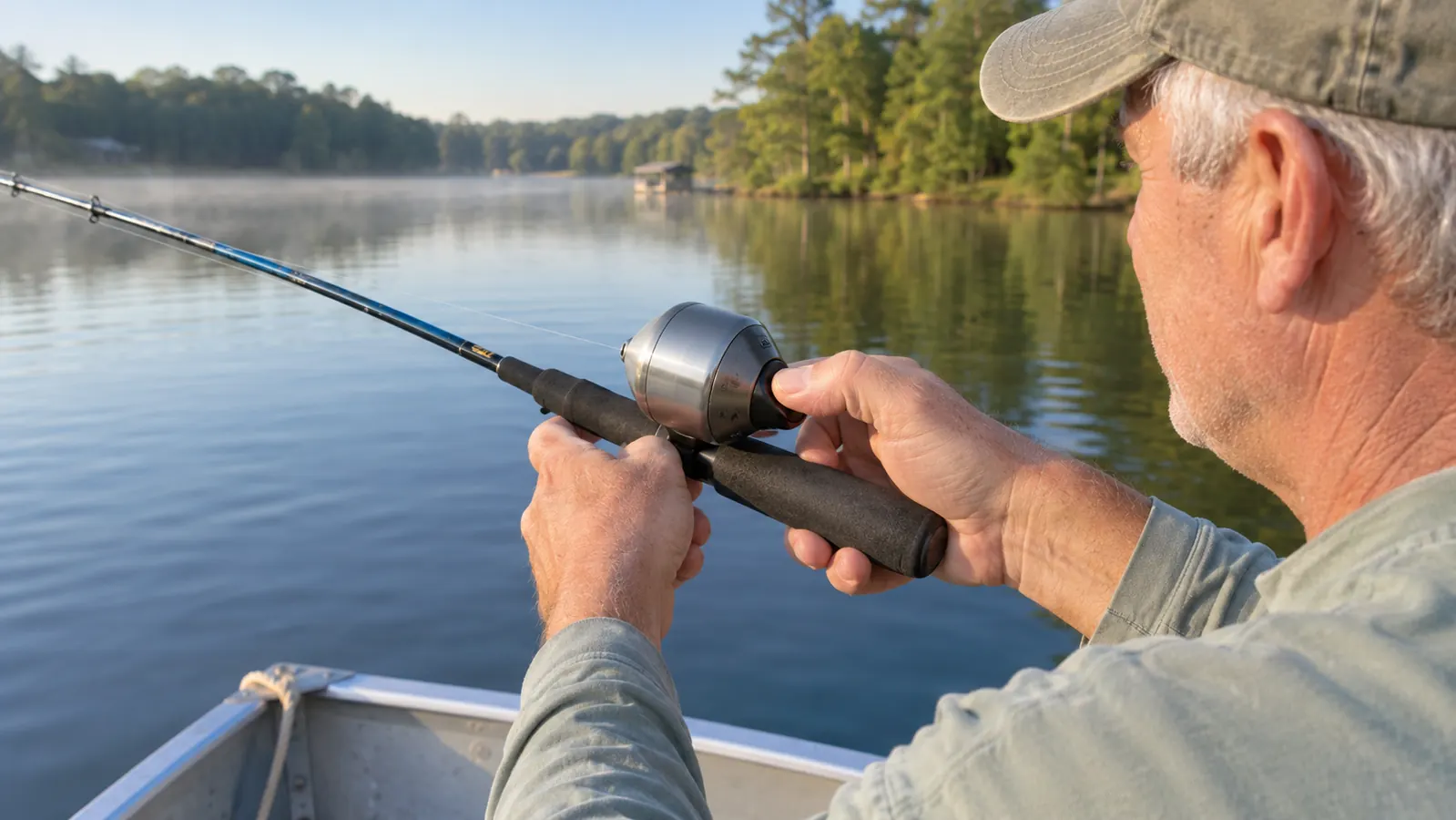
The clearest way I can explain the gap is to put both rods in your hands on the same bank. With the Zebco, you press the button with your thumb, bring the rod back over your shoulder, and let the button go as you come forward. The bait leaves when you tell it to. There is no bail to flip and no line to pin against the rod with your finger. Tyler learned that in about four casts, and the fifth one went where he was aiming.
With the Ugly Stik kit, you flip the bail open, pin the line against the rod with the pad of your index finger, and let the line go at the top of the forward cast. Do it a hair late and you get a loop. Do it a hair early and you get a loop. That is not a defect. It is how a spinning reel works, and it is why every kid on a dock ends up with a knot in his line on the first afternoon. Adults get it faster. Kids get it eventually.
Now flip it around. Take a small jig, the kind you fish for crappie, and try to place it next to a dock piling with the Zebco. The rod carries 10-pound line and has the power to match, so a jig that light never really loads it. You end up lobbing. On the Ugly Stik, the same jig bends a light power rod with almost no effort, and the spinning reel feeds line off the spool face instead of pulling a coil out behind it. That is the trade in one sentence. One rod is easier to operate. The other one is better at the small stuff.
How Both Have Held Up
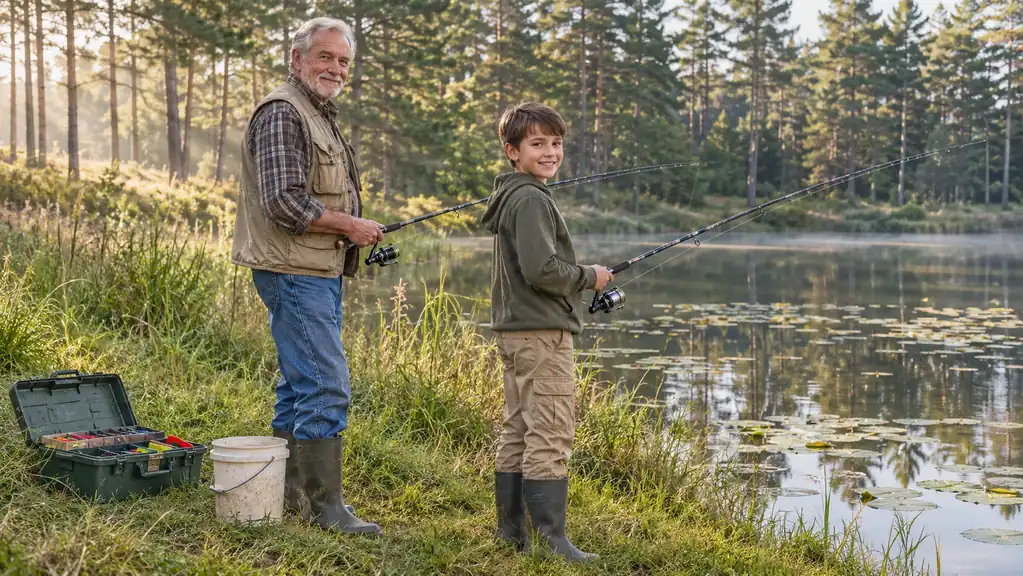
The Zebco has been on the water since early spring, mostly Saturdays at the neighborhood pond with Tyler, plus calm mornings in the boat when the bass push up shallow. That is eight months of a kid setting it down in the grass, stepping over it, and dropping it once on the ramp. The reel still seats tight on the rod. The EVA grip has not come loose. The button still returns clean and the line still goes out straight.
The Ugly Stik kit has seven months on it and has had an easier life, because it is the spare. It rides in the boat locker, gets used for crappie and panfish, and gets handed to whoever forgot a rod. The two-piece joint still lines up. Nothing has loosened. The reel still does what it did in the spring.
My routine is the same for both. Fresh water rinse on the reel after every trip, a drop of reel oil once a month, rods back on the wall rack in the garage. Neither one has needed a repair or a replacement part. That is not a dramatic endorsement and I am not going to dress it up as one. It is what a working combo is supposed to do, and a lot of cheap ones do not.
What Annoys Me About Each One
On the Zebco, the 10-pound line and the heavier power are the limit. If you want to fish a tiny jig in clear water, this is the wrong rod and no amount of practice fixes it. The closed reel is also not something I would hand an adult who wants to learn finesse fishing, because the skills do not carry over to a spinning outfit. And one thing worth reading carefully before you order: the listing data I pulled lists two rods and two reels as included components, which reads like a pack. I bought a single combo for Tyler and set it up as one rod, but check the configuration on the page before you check out.
On the Ugly Stik kit, the light power is a compromise in the other direction. If a good bass takes a jig around a dock piling, you are playing that fish out rather than turning it, and sometimes it wins and wraps you. The 5-foot length costs you casting distance on open water compared to a longer rod. And the reel that comes with the kit is basic, which is what you would expect from a complete outfit at this level. It has done its job for seven months without complaint.
Who Should Buy Which
Buy the Zebco 33 if the rod is for a kid, a grandkid, or an adult who has never cast before and would rather learn to fish than learn to tune a reel. It is also the better bank rod of the two, because the closed reel and the heavier line tolerate being laid on the ground and dragged through grass. The size 30 reel holds plenty of 10-pound monofilament for pond and small lake fishing, and the one-year warranty from Zebco covers the season a beginner is hardest on a rod.
Buy the Ugly Stik kit if you already own a main rod and want a second one that handles light jigs, or if you keep a rod behind the truck seat for quick stops, or if you regularly have a guest in the boat who needs something to fish with. Light power and a spinning reel are the right answer for crappie and panfish, and the two-piece 5-foot blank stores in a locker without taking up the whole boat. It is not the rod I would hand a ten year old for his first season. Tyler settled that question for me without meaning to.
The rod a ten year old can cast on the first try
5-foot 6-inch two-piece fiberglass rod, size 30 spincast reel, all-metal gears, 4.1:1 ratio, and a push button instead of a bail. Eight months on Tyler's rod and it still casts clean. Check the current configuration and today's price on Amazon.
Amazon Check Today's Price on Amazon →