
The short answer first, because you did not come here for a long wind-up. If you fish big water, chase catfish in current, or want one spinning reel that still feels tight after a few seasons, put the KastKing Sharky on your rod and stop thinking about it. If you fish farm ponds a few times a month, want a spare combo behind the truck seat, or you are buying a first reel for a kid, the Piscifun Flame does the job and leaves money for line and gas. I have owned the Sharky for about nine months. I have handled the Flame enough to know where it gives and where it does not.
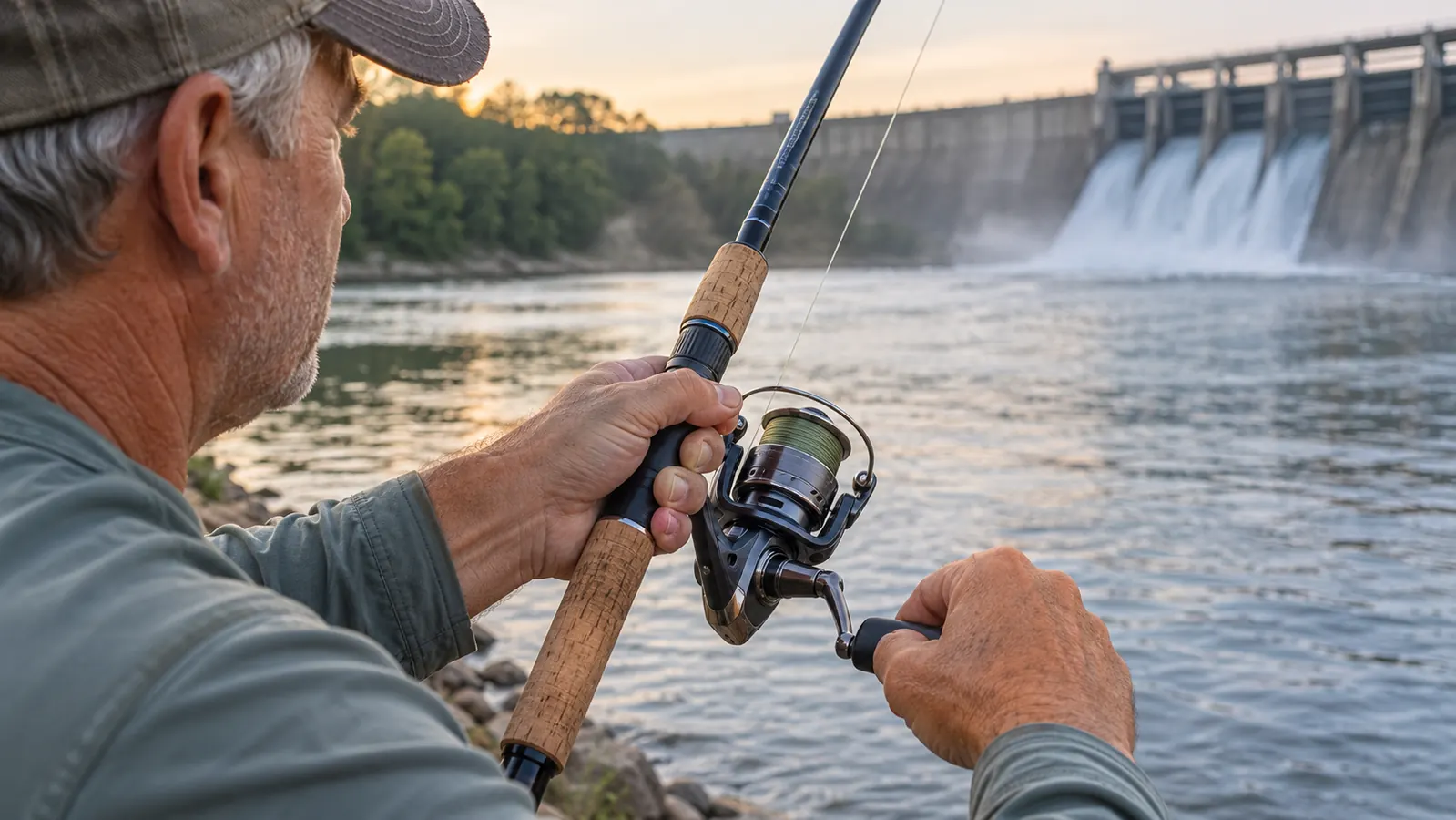
I am not a tackle reviewer. I am 58, retired out of HVAC, and I live outside Mooresville, North Carolina, about fifteen minutes from Lake Norman. Since I retired I fish two or three mornings a week plus most Saturdays, mostly bass and crappie on the lake and catfish on the Catawba below the dam. I bought the KastKing Sharky in size 3000 late last winter for the river, mounted it on a seven-foot medium spinning rod I already owned, and it has not come off that rod since. Here is the honest split.
| KastKing Sharky 3000 | Piscifun Flame | |
|---|---|---|
| Up-front cost | Higher, and you feel it at the register | Lower by a wide margin |
| Max drag | 33 lb, double-disc carbon fiber washers on the 2000 and 3000 sizes | Lower published drag, plenty for bass and panfish |
| Body and frame | Nylitech body, rated 25% better compression resistance and 28% greater impact resistance | Composite shell that flexes more under a hard load |
| Weight in the hand | Heavier, and it balances a longer rod | Lighter, easier to cast all morning |
| Handle | Aluminum | Composite |
| Bearings | 10+1 stainless steel | Smaller bearing count |
| Line pickup | 6.2:1, quick enough to crank a bait back | Slower, still fine for bass and crappie |
| Servicing at home | Rinse, oil, done. No bench needed | Rinse, oil, done. No bench needed |
| Best for | Catfish in current, big water, one rod that does a lot | Ponds, panfish, a spare combo, a first reel |
Where the KastKing Sharky Wins
The drag is the whole argument. Thirty-three pounds of max drag on a 3000 size reel is more than most bass fishermen will ever load, and that is exactly the point. Mine goes to the Catawba below the dam with eight ounces of lead and a chunk of cut bait sitting in current that wants to push everything downstream. The 2000 and 3000 sizes run a double-disc carbon fiber drag stack, and the bigger 4000 and 5000 go to a triple-disc stack rated up to 39.5 pounds. What that buys you is a drag that starts where you set it and stays there. I have not had the ugly moment where the drag grabs, slips, and grabs again. I have had that moment plenty on cheaper reels.
Here is how I set it, because that is the part nobody explains. I tighten the star until I can pull line off the spool with a hard steady pull and no jerk, then I back it off an eighth of a turn. With eight ounces of lead in the current, that setting holds bottom on the cast and still gives line when something picks the bait up and runs. On the old reel I was chasing that setting all morning, tightening a click at a time as the washers warmed up and got grabbier. With the Sharky I set it once at the ramp and did not touch it again until I was back home rinsing it in the driveway.
The body is the other half of it. KastKing builds the Sharky with what they call Nylitech and rates it at 25% better compression resistance and 28% greater impact resistance. I cannot test those numbers in my garage and I am not going to pretend I did. What I can tell you is what nine months in a jon boat does to a reel. It gets dropped on aluminum, knocked against a gunwale, and swept off a seat onto carpet. Mine has taken all of that and the body still feels solid, the aluminum handle still folds out with the same click, and the spool has not developed a wobble. Ten plus one stainless bearings and the long cast spool are why line comes off clean when I need to reach a piece of water.
Where the Piscifun Flame Wins
The Flame wins on money and on weight. I am not going to dance around it. It is the cheaper reel, and if you are outfitting a kid or putting together a second combo to keep behind the truck seat, spending more on the reel than you did on the rod is a hard sell at the kitchen table. It is also lighter in the hand, and by the third hour of casting a light jig that matters more than any spec sheet. On a seven-foot medium rod the Flame feels like it is barely there. The Sharky feels like a tool.
The second thing the Flame has going for it is that it does not ask much of you. A lighter composite body and fewer bearings mean less to fuss over and less to lose. If your reels live in a bucket in the shed and get rinsed when you think about it, the cheaper reel is the one that hurts less to wear out. That is not a knock. Most people who fish a farm pond twice a month do not need a reel built for current, and buying one anyway is how a good reel ends up sitting on a shelf in the garage.
The reel that stayed on my river rod for nine months
KastKing Sharky in size 3000. Double-disc carbon fiber drag rated to 33 lb, Nylitech body, aluminum handle, 10+1 stainless bearings. Mount it on a seven-foot medium rod and fish it.
Amazon Check Today's Price on Amazon →Nine Months on the Catawba
I bought the Sharky late last winter because the reel it replaced had started losing drag under a heavy sinker. That is how it goes. A reel does not fail all at once. The drag gets a little grabbier each season, you back the star off a quarter turn to compensate, and then one morning a fish makes a run and you feel the line go slack and you know. I wanted a reel with a drag stack that would hold a setting, and I wanted it to not cost what a machined reel costs. That was the whole shopping list.
I looked into rebuilding the old one instead. New drag washers, a new bail spring, a bearing or two, and I would still have an old reel with a body that had been dropped on aluminum a hundred times. I have done that kind of repair on plenty of things over the years and it works right up until the next part wears out. I wanted to start from a reel that was tight out of the box and keep it that way with a rinse and a drop of oil, not nurse an old one along for another season and hope.
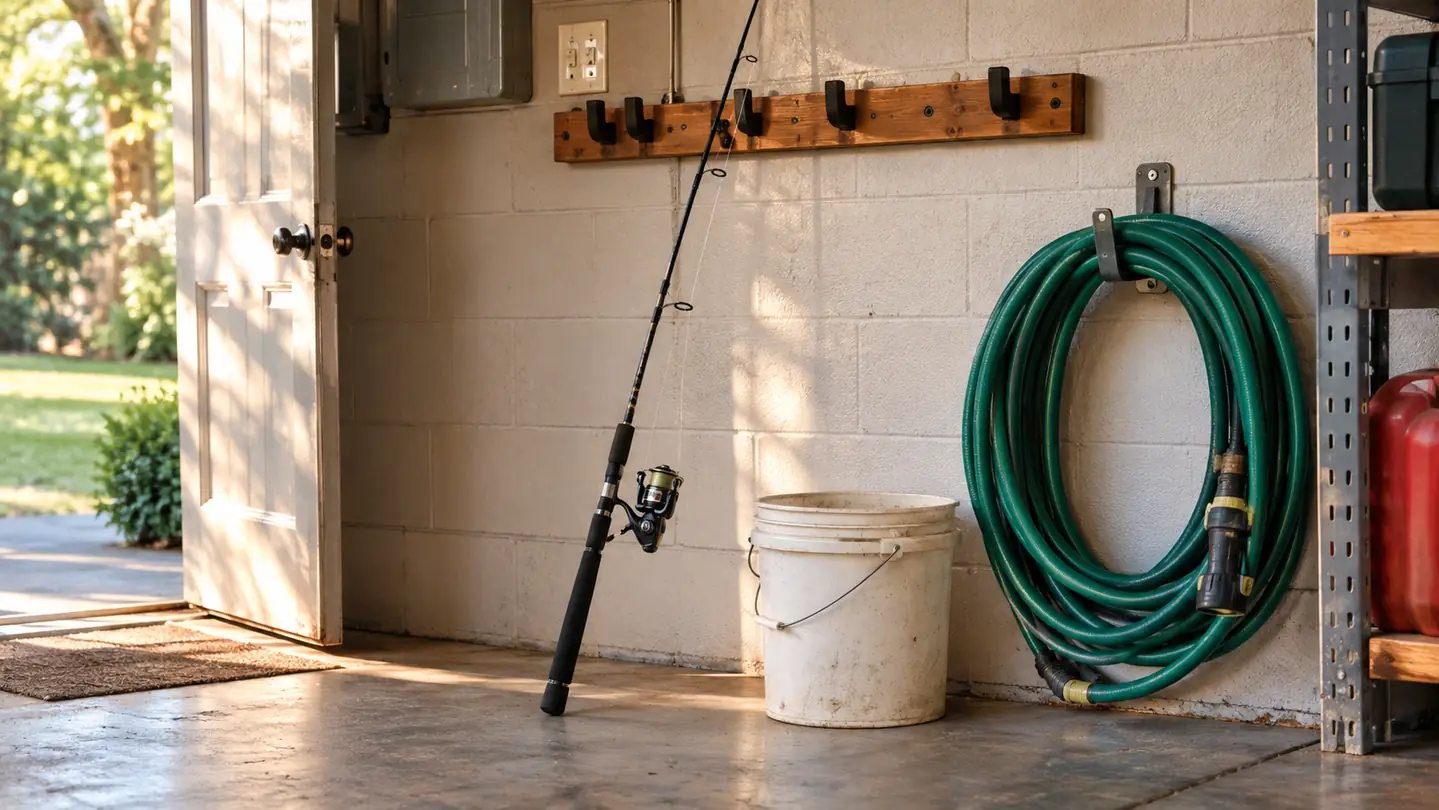
The maintenance routine has not changed. Every trip ends with the rod and reel getting a rinse of fresh water in the driveway, a wipe down with a rag, and then back on the wall rack in the garage. Once a month I put a drop of reel oil on the handle knob and the bail roller. That is it. I am not tearing reels down on a bench. I did enough of that with furnace parts for thirty years. The Sharky has not asked for anything more, and the handle still turns free and smooth.
The most useful thing I can tell you is that nothing has loosened up in a bad way. Cheap reels develop a wobble in the handle and a rattle in the bail after a season of use. This one has not. The bail snaps over with the same authority it did in March, the handle folds out tight, and the spool still sits square on the shaft. When I pull line off by hand to check the setting, it comes off the same way every time.
Nine months of river fishing, a rinse after every trip, and the drag still starts and stops exactly where I set it. That is the whole review.
The Drag Is the Whole Argument
If you take one thing from this, take this. On a spinning reel, the drag is what decides whether you land the fish or tell the story about the one you lost. Gear ratio gets the attention because it is a number printed on the box, but the drag is the part that works when a fish is running.
The Sharky's 6.2:1 gear ratio is quick enough to crank a bait back and pick up slack when a fish turns toward the boat. That is all I need from a ratio. I do not burn baits and I do not fish tournaments. If you do, you may want something faster for working a moving lure, but for live and cut bait on the bottom, 6.2:1 is plenty and it still has the torque to move a heavy sinker without feeling like you are grinding.
The long cast spool matters more than I expected. Below the dam I am throwing eight ounces of lead and cut bait, and the further out I get that bait into the seam, the better my odds of the rod loading up. A spool that lets line come off without fighting it buys real distance. I respool once a season with fresh monofilament, fill it to about an eighth of an inch below the lip, and that is the only tuning the cast needs. Nothing fancy. Just clean line on a spool that does not work against it.
Where the Flame gives ground is under a heavy load. It has less drag on paper and a body that flexes more, and you can feel both when a big fish is dogging in current. For a pond bass that runs three feet and gives up, you will never know the difference. For a river cat that leans into the current and does not stop, you will know it in your forearm.
What Neither Reel Will Do
Neither reel will catch you more fish. I want to be clear about that, because a lot of reel talk reads like the hardware is the fisherman. It is not. Line condition, hook sharpness, where you put the bait, and whether you got out of bed at five in the morning decide your day. A reel only has one job, and that is to not be the reason you lost the one you had on.
The reel is one part of a system, and it is usually the part blamed last. I fish twenty-pound monofilament on that river rod and I run the last three feet of it through my fingers after every cast, because a nick you can feel is a break waiting to happen. I tie a fresh knot when the tag end looks rough. None of that has anything to do with which reel is on the rod, and all of it decides whether you land what you hook.
Neither is going to feel like a machined reel that costs several times more. I have handled those in a shop and they are lovely, and they are also not what I am going to leave sitting in a jon boat while I eat a sandwich. The Sharky sits in the spot where it is good enough to trust and cheap enough to use hard, which is the spot I want a working reel to sit in.
Who Should Buy Which
Buy the KastKing Sharky if you fish moving water, fish big water, or want one spinning reel that covers bass, crappie, and catfish without a second thought. Size 3000 on a seven-foot medium rod is the combination I have run for nine months, and I would buy it again tomorrow morning. It is the reel for the person who keeps a rod rigged by the door and expects it to work when they grab it on the way out.
Buy the Piscifun Flame if you fish ponds and small lakes a few times a month, if you are building a second combo on a budget, or if the reel is going to a kid. My grandson Tyler is ten and fishes a push-button spincast, and when he moves up to a spinning reel I will hand him something light and simple before I hand him the Sharky. Nobody learns to cast on a rod that wears them out by lunch.
One reel, one rod, and a river that keeps pushing
KastKing Sharky, size 3000. Rated to 33 lb of drag with a double-disc carbon fiber stack, a Nylitech body, and an aluminum handle. Nine months in a jon boat and it still sets the same.
Amazon Check Today's Price on Amazon →