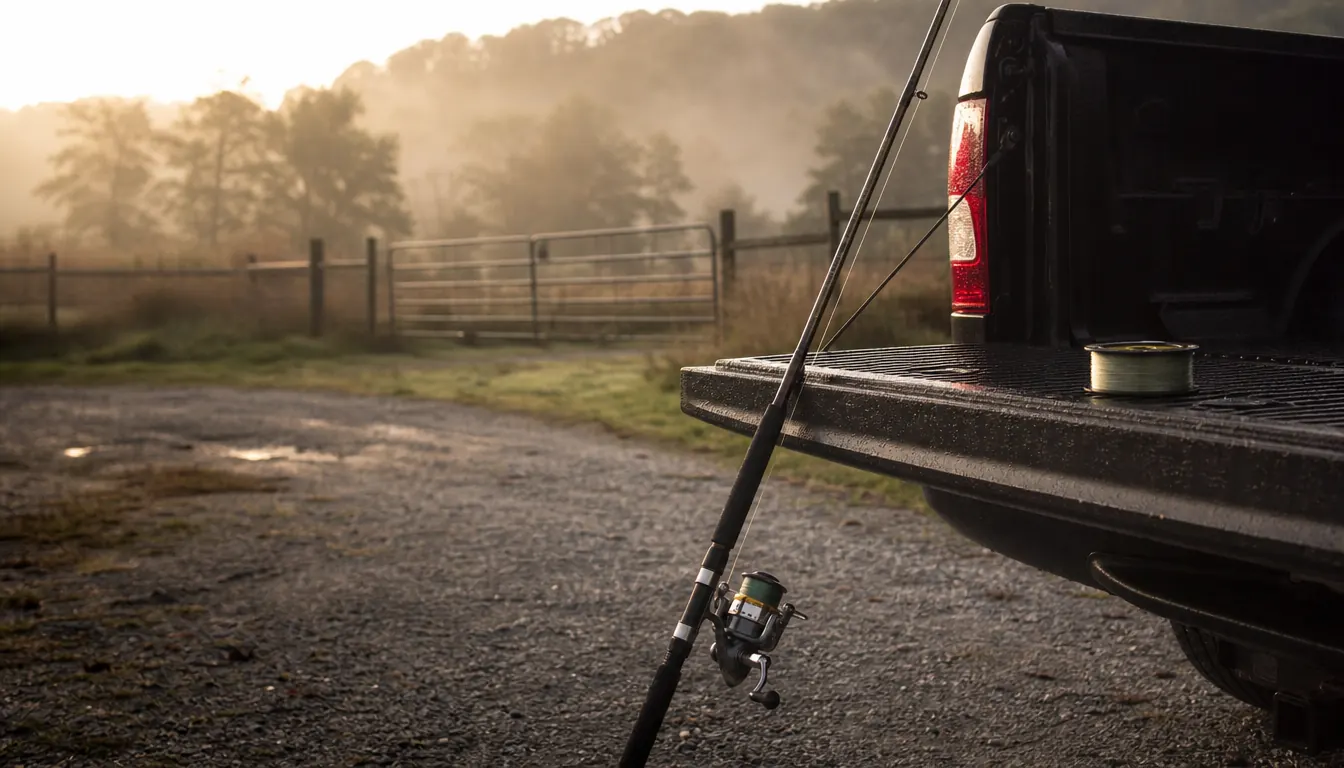
Line twist is not a mystery and it is not the line's fault. If your spinning reel starts throwing loops off the spool two casts after you filled it, the line went on wrong and the reel is just reporting the news. I have watched this happen at the ramp more times than I can count, usually to somebody who just bought fresh line and is now picking at a bird nest with a pocket knife while his boat drifts into the dock.
Twist on a spinning reel comes from three places, and only one of them is the line itself. The other two are how you loaded it and how you close the bail afterward. I spool my own reels on the tailgate in about ten minutes, and the one I have done it to most this year is a KastKing Sharky in size 3000, the reel that lives on a seven-foot medium rod for catfish below the Catawba dam. There is nothing special about my method. It is just the order of operations.
Here is the whole thing, start to finish, the way I do it in the driveway before the boat ever leaves the house.
A 3000-size reel with a spool that feeds line clean
The KastKing Sharky 3000 runs a 6.2:1 gear ratio for quick line pickup, 10+1 stainless steel bearings, a double-disc carbon fiber drag rated to 33 pounds, and an aluminum handle that switches sides.
Amazon Check Today's Price on Amazon →Step 1: Match the Line to the Reel and to the Water You Fish
A 3000-size reel is a middle-of-the-road workhorse. It does not want thirty-pound braid any more than it wants four-pound mono. On mine I run 10-pound mono for crappie jigs, 12- to 15-pound mono or 20-pound braid for catfish, and 8-pound fluorocarbon when the water is clear and the bass are looking at the lure instead of eating it.
Mono has memory. It comes off a filler spool in coils and wants to keep that shape, which is why it twists worse than anything else when it is loaded carelessly. Braid has almost no memory but it is slicker, and if the first twenty yards go on loose the whole spool will dig in on a hookset. Fluorocarbon sits between the two, and a bad spool of it shows up as a slinky on your third cast.
Last March I filled the Sharky with 17-pound mono because it was what the tackle shop on Highway 150 had on the shelf and I did not feel like driving to Hickory for 12. The reel handled it fine, but the line was too stiff for the quarter-ounce crappie jigs I was throwing, and on a cool morning it came off the spool in coils that popped through the guides. Nothing wrong with the reel. Wrong line for the job. I stripped it that afternoon, wound on 10-pound, and the same rod fished clean the next four trips out.
Pick the line before you pick the method. Write the pound test on the label and keep the label in the tackle box until the spool is empty. When the line starts acting strange three months from now, you will want to know what you put on and when.
Step 2: Lay the Filler Spool Flat and Let It Tell You Which Way to Feed
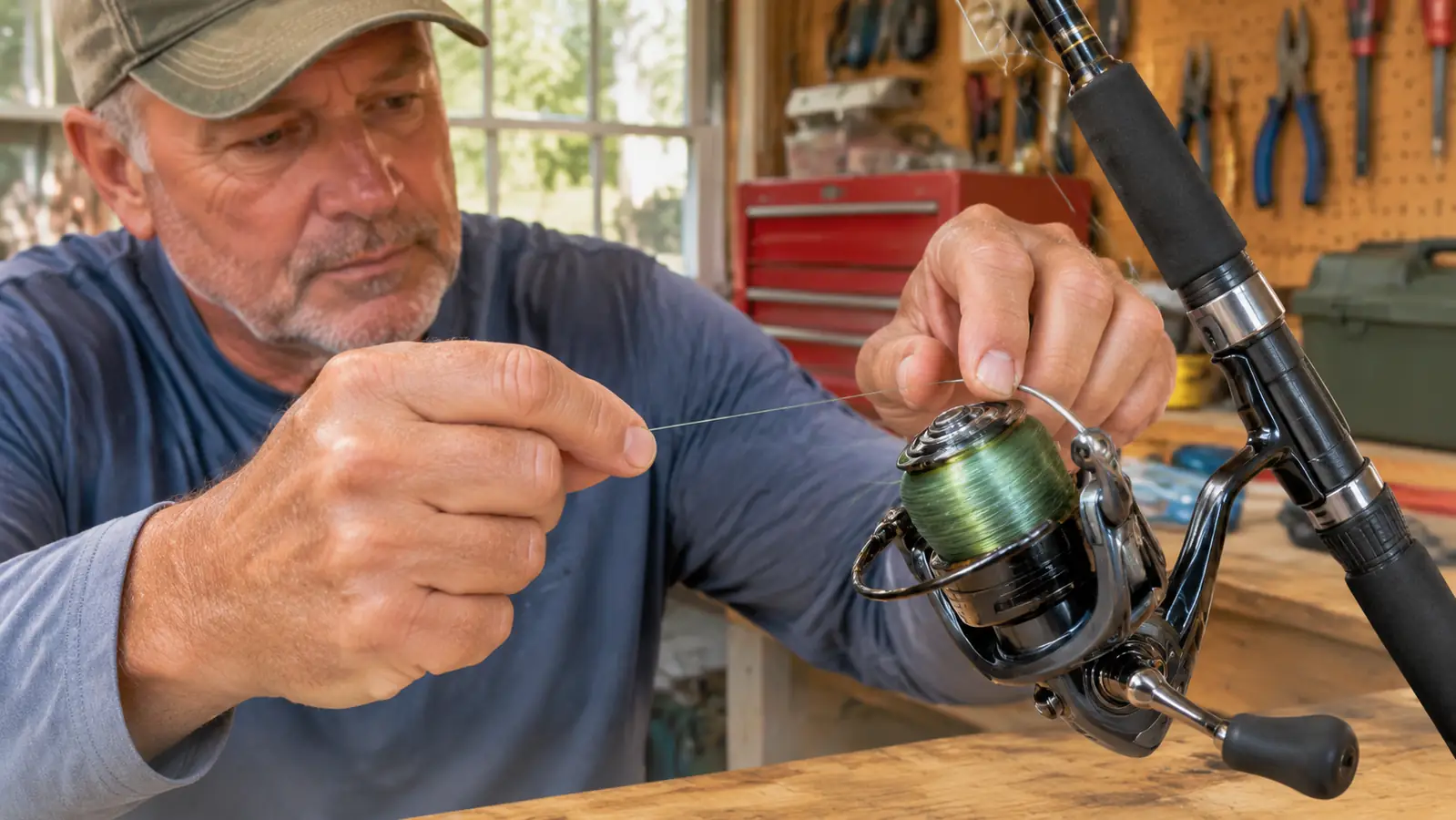
There are two ways to hold a filler spool and only one of them is right on any given day. You can drop it flat on the floor, or you can run a pencil through the hole and hold it in front of you. Either way, the line has to come off that spool in the same direction the bail travels around the reel. If it comes off against the rotation, every crank stores a twist in the line.
The label does not always tell you the truth, because it depends on which side of the spool you are looking at. So do not trust the label. Test it. Crank thirty turns, stop, open the bail, and pull a couple feet of line off with your hand and let it hang. If it hangs in a straight-ish line with a gentle curve, you have it right. If it comes off in tight coils like a phone cord, the spool is face down. Flip it and start over.
I learned to run that test the hard way, on a cool morning at the ramp off Highway 150. I had fresh 12-pound on and I was in a hurry because the fog was still sitting on the water and I wanted to be on the far point before it burned off. First cast threw a loop the size of my hand. I blamed the line, cut it off, tied on again. Second cast did the same thing. The filler spool had been sitting face down on the tailgate the whole time. I flipped it, wound the rest on properly, and fished three hours without a single overrun. The line was never the problem.
That test takes ten seconds and it saves an entire spool of line. I run it every time, even with line I have used before, because filler spools get set down the wrong way in a garage.
Step 3: Load It Under Tension, Not by Feel
Line has to go onto the reel tight. Not banjo-string tight, but tight enough that you cannot press a thumbnail into the wound line and leave a dent. Loose line on a spinning spool is what causes the whole coil to lift off on a cast, and once it lifts it does not go back down evenly.
The cheap way to hold tension is to pinch the line between the thumb and forefinger of your free hand, about a foot above the reel. The better way is to run the line through a folded wet paper towel, or a rag with a drop of line conditioner on it. Wet line packs tighter, and the towel wipes grit off before it reaches the spool. Keep the rod tip a couple feet back so the line goes on at a slight angle and lays across the spool instead of stacking in one spot.
I have also done it the lazy way, and I know what that costs. Two falls ago I wound a whole spool on with almost no tension, thumb on the line only when I remembered it, and it looked fine sitting on the deck. It fished fine for about six casts. Then a fifteen-inch bass took a jig on a long cast, the line dug into the loose wraps underneath, and I stood there with a fish on and nothing coming off the spool. I lost the fish and cut out about fifteen yards getting the spool level again. Ten minutes of tension at the tailgate would have saved both.
Tie the arbor knot first, snug it down against the spool hub, and turn two or three wraps by hand before you touch the handle. That is the part that slips on braid, and it is why a lot of people put ten yards of cheap mono down first. On the KastKing the spool is cut to reduce line friction on the cast, but it will not load itself and it will not forgive line that went on slack.

Step 4: Stop an Eighth of an Inch Below the Lip
Overfilling is the most common cause of loops on the first cast, and it is the easiest thing on this list to fix. When you are done cranking, the line should sit about an eighth of an inch below the front lip of the spool. Not level with it. Below it.
Check it by holding the reel up so the spool face catches the light and sighting across it. You want a thin ring of bare spool showing at the edge. If the line is humped up over the lip, strip twenty yards off and try again. If it is a quarter inch low, that is fine. A little under-filled costs you a few feet of casting distance. Over-filled costs you a morning.
After twenty or thirty casts the line beds down and the level drops on its own. Do not top it off mid-trip because it looks low. Fish it out and re-spool at the house.
Step 5: Test for Twist Before You Tie Anything On
Before a hook, before a swivel, before anything, find out what you actually put on the spool. In the yard, open the bail and walk forty yards of line out across the grass with nothing tied to the end, then reel it back with light tension between two fingers. In the boat, let it trail out behind a slow troll. Same idea either way. Watch what the line does on the way back.
If it comes back straight, you are done. If it comes back with coils that want to wrap the rod tip, you have two choices. Cut off the last ten yards and see whether the twist was only in the outer layer, which happens more than people think. Or, if the whole spool is bad, flip the filler spool and run it through again, because the twist went in during loading and it can come out the same way.
While you are there, check the roller on the bail. Run a fingernail around it. A nicked or gritty roller roughs up line on every cast, and it feels exactly like line twist right up until the line starts to fray.
Close the bail with your hand, not the handle. Cranking it shut puts a half twist in the line every single cast, and you cannot spool your way out of a twist you add forty times a morning.
What Else Helps
A drop of line conditioner at the start of a trip is not a gimmick. It softens mono's memory and it lets the line come off the spool in a smoother sheet instead of a spring. I put a couple of drops on a rag and run the line through it as it goes on, then leave it alone. Too much is worse than none, because it holds grit.
If you fish braid, put ten or fifteen yards of cheap mono down on the spool first. Braid is slick and it will spin on a bare spool under drag, which feels like your drag has gone soft when it has not. That mono base gives the braid something to bite into. It is true on any reel, including the KastKing, and it costs you nothing but the ten minutes it takes to wind on.
Re-spool once a season, or sooner if the last thirty yards feel rough between your fingers. Line is the cheapest thing on the boat and the only thing between you and the fish. I have thrown away line that looked fine and never regretted it. What I have regretted is trying to get one more trip out of a spool that was already curling.
I keep my filler spools in a plastic shoebox in the garage, labels up, and I write the date on the side with a marker when I open a new one. Line does not spoil sitting in the dark. It does pick up grit, and it does take a set if it rides around in a hot truck all summer. A spool that spent July behind the seat is not the same spool it was in April, and that is why the rod that lives in the truck gets new line more often than the ones on the wall rack.
When the rods go back on the wall rack in the garage, I leave the line under light tension and the drag backed off. A reel that sits for a month with the drag cranked down will take a set in the washers, and a spool of line sitting slack will coil on its own before you ever make a cast.
The reel I spool this way, and would buy again
KastKing Sharky 3000. 6.2:1 gear ratio, 10+1 stainless steel bearings, double-disc carbon fiber drag rated to 33 pounds, aluminum handle, ambidextrous. It has been on the Catawba rod for about nine months and it is still the one I reach for.
Amazon Check Today's Price on Amazon →