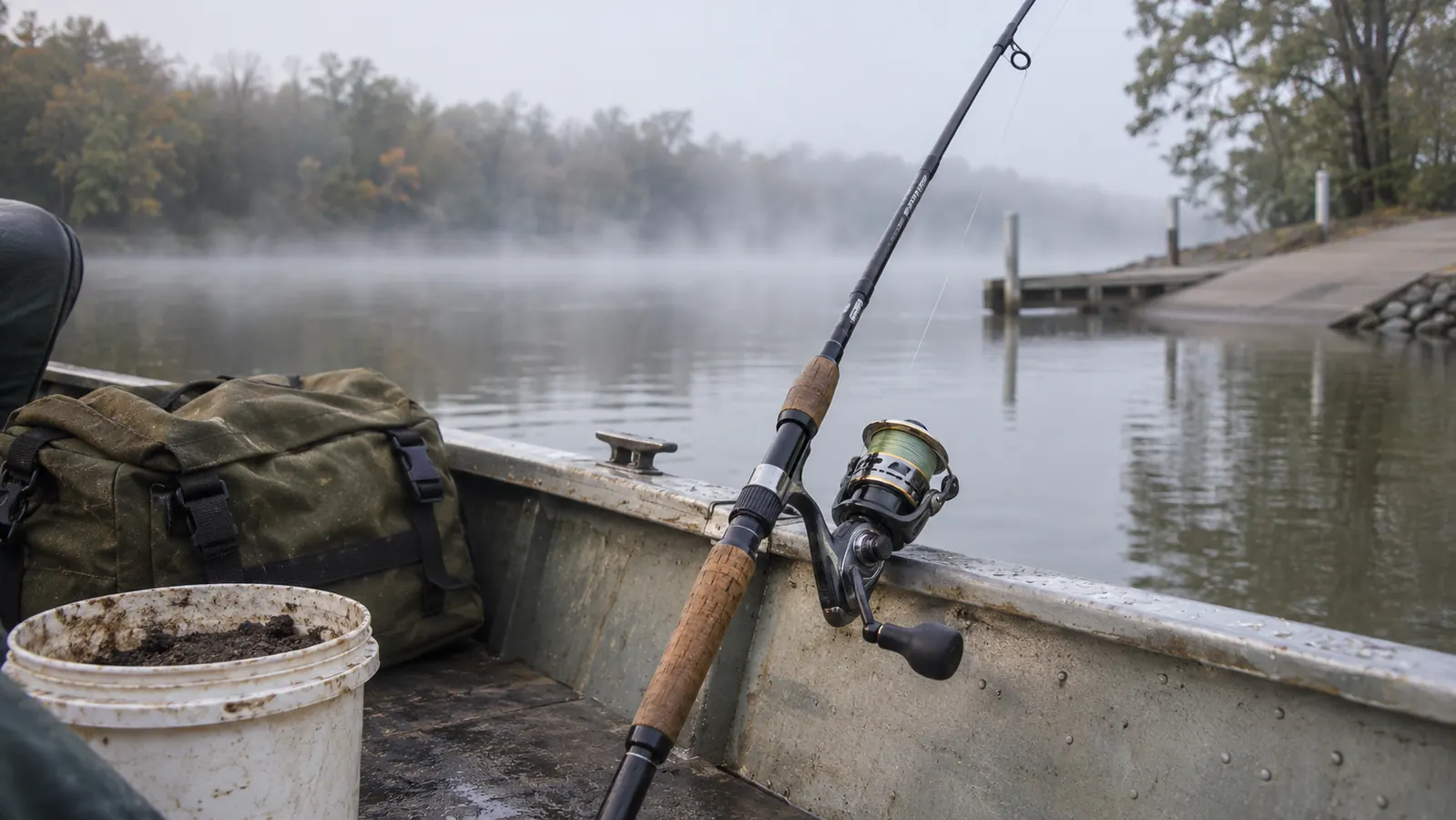
Nine months ago I spooled a KastKing Sharky 3000 with fresh line, bolted it to a 7-foot medium spinning rod that was already hanging on the garage rack, and carried it down to the Catawba below the dam to soak cut bait for catfish. I had read the listing twice before I ordered it. I knew the numbers by heart. What I did not know was which of those numbers would still matter to me by August, and which ones I would quit thinking about by the second trip out.
That gap is what this review is for. Not whether the Sharky is a decent reel, because it is, and I would buy it again. What I want to lay out is what the first month feels like next to the sixth, what the reel asks of you in between, and the one or two spots where the selling points and the actual fishing part ways. If you want a pat on the back for a purchase you already made, this is not that.
The Quick Verdict
A quiet, solid spinning reel that handles heavy lead and moving water without complaint. Rinse it after every trip and it stays that way. Skip it if what you want is a featherlight reel for throwing small jigs all morning.
Amazon Check Today's Price →Nine months later, it is still the reel on my catfish rod
The KastKing Sharky 3000 has been spooled and fishing since late winter. Current price and available sizes are on the listing.
Amazon Check Today's Price on Amazon →How I've Used It
I bought the Sharky late last winter, mostly for the tailrace below the dam. That water is not a finesse fishery. You are throwing three, sometimes four ounces of lead with a fish finder rig and a chunk of cut shad, and you are sitting still in a 16-foot aluminum jon boat while the current pushes you sideways and the rod tip nods. It is hard, repetitive work for a reel. Between trips down there I have also thrown it on Lake Norman for largemouth, Texas rigs and a shaky head mostly, and I have cranked it against a few fish I did not deserve to land.
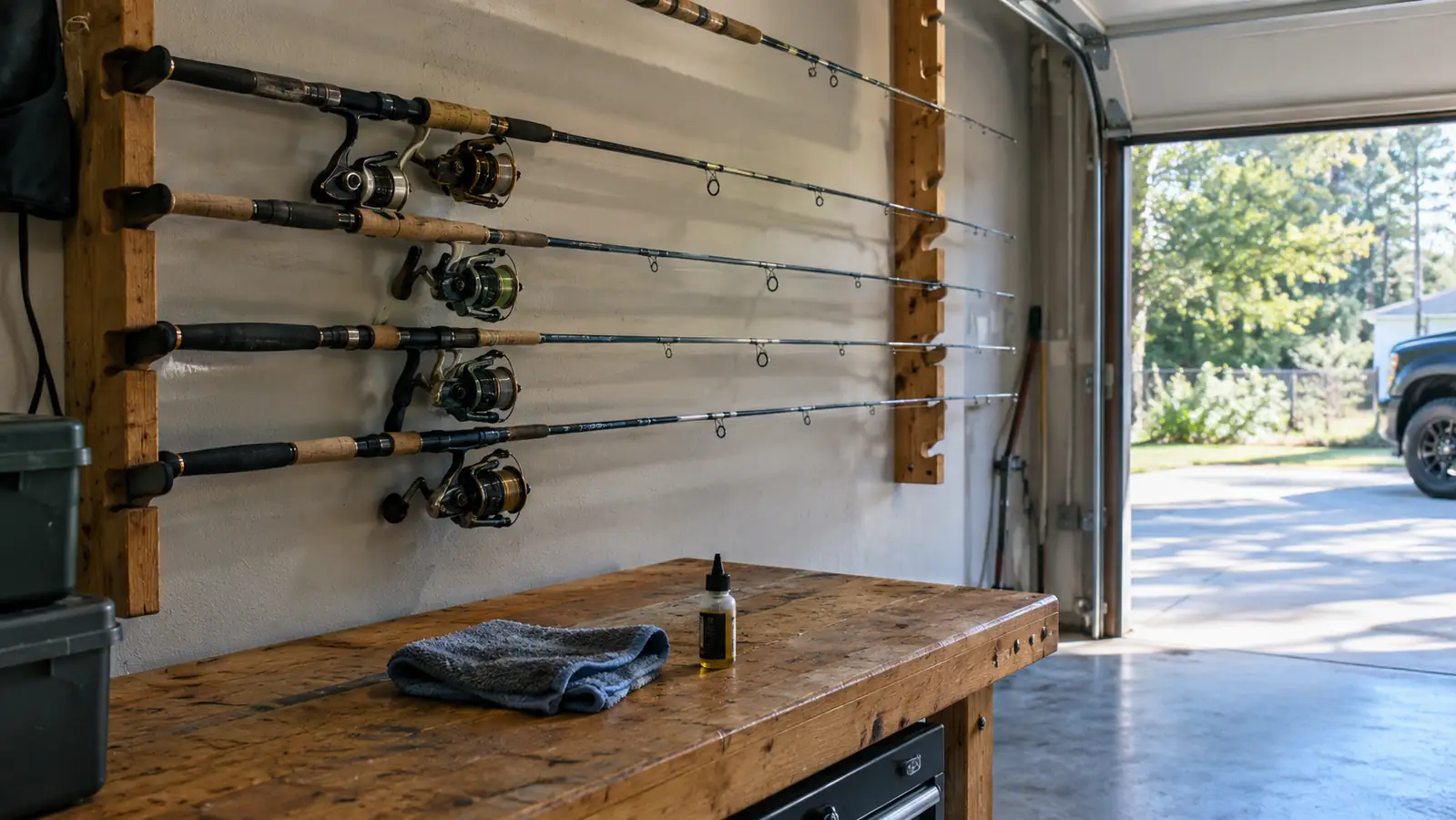
The workload has been two or three mornings a week since February, plus most Saturdays. Every one of those trips ends the same way. The reel comes off the rod in the driveway, gets rinsed with fresh water from the hose, gets set on a towel on the workbench to dry, and goes back on the rack. Once a month it gets a drop of reel oil. That is the entire maintenance program. I am not gentle with equipment, but I am consistent with it, and I think that consistency is a bigger part of why this reel still feels the way it did in March than any spec on the box.
What that routine has not tested is worth saying plainly. This reel has never been dunked. It has never been dropped on rock. It has seen freshwater only, so I cannot tell you one useful thing about how it holds up in salt, and I am not going to pretend otherwise. The biggest fish it has stopped was a blue cat somewhere around twelve pounds. If you are chasing forty-pound fish in heavy current, my experience is not your experience. The first trip of the season is a good illustration. Water was forty-four degrees, the current was running harder than usual after three days of rain, and I ran four ounces on a fish finder rig because three kept swinging back into the bank. That is the heaviest I have asked this reel to do, and it did it for five hours without a complaint.
Smoothness: Where Ten Bearings Stop Mattering
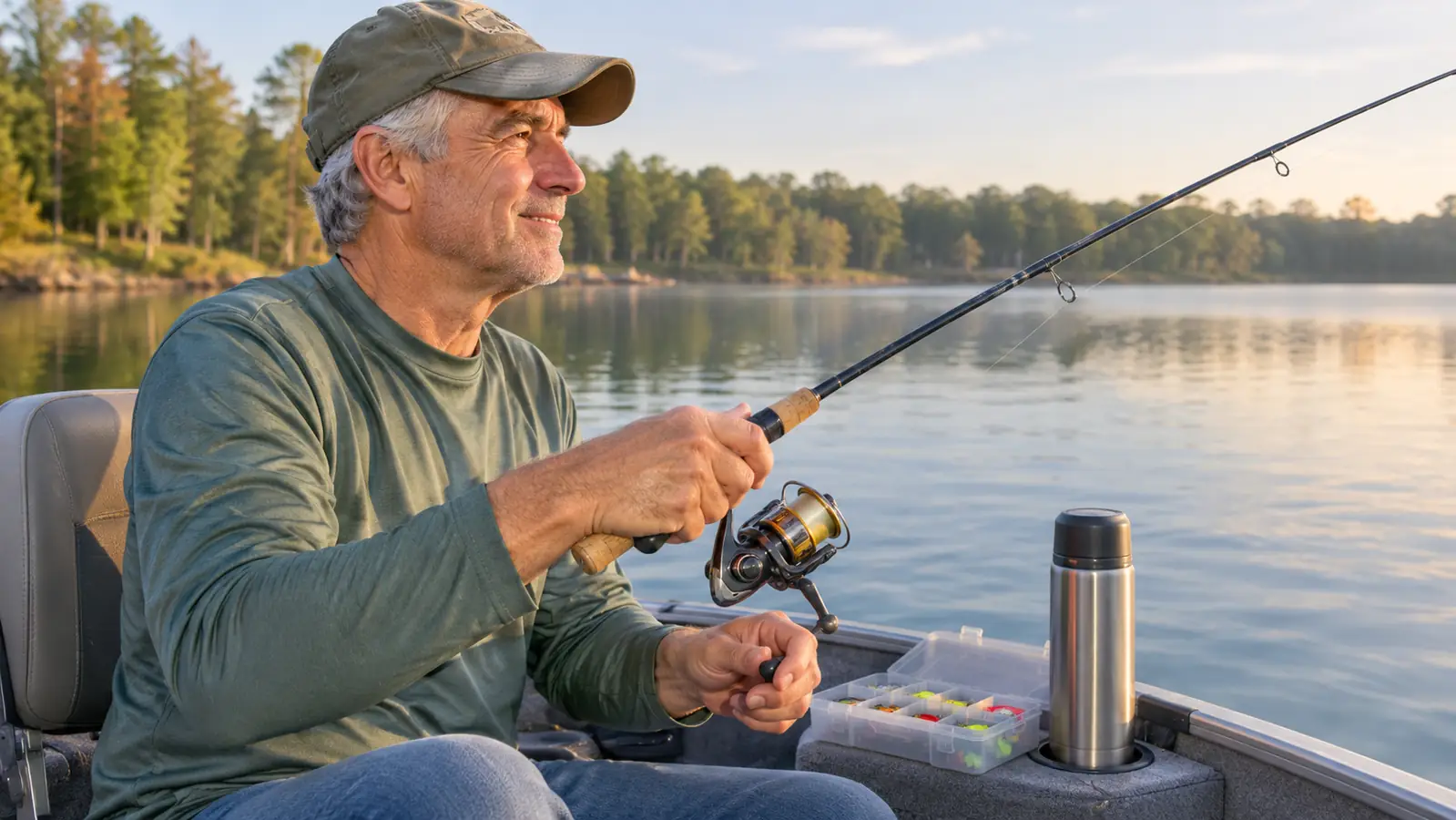
The Sharky carries 10+1 stainless steel bearings, an aluminum handle, and a 6.2:1 gear ratio. Out of the box, that combination feels like more reel than the price suggests. The handle turns with almost no resistance, the bail snaps over cleanly, and there is none of the gravelly rumble you get from a cheap combo that has been sitting on a shelf for two years. My first thought, honestly, was that I had been fishing worn-out reels for longer than I wanted to admit.
The interesting part is that smoothness stopped being something I noticed. By the third trip I was not thinking about the handle at all, which is the highest compliment you can pay a reel. Where the bearings and the gear ratio do earn their keep is under load. Cranking three ounces of lead up off the bottom in current, over and over, is where a loose reel announces itself with a grind and a wobble. This one just turns. The 6.2:1 picks up line fast enough that I am not winding forever to get a bait back in, and the aluminum handle has no flex in it when I lean into a hookset.
Six months in, the crank still felt new. What changed was not the reel, it was one small part of it. The line roller picked up grit from river water and started to feel slightly rough under the line, a faint rasp rather than a grind. I noticed it on a Saturday, meant to deal with it, and did not for about a month. When I finally pulled the roller, wiped it, and put a drop of oil in it, the rasp was gone in ten minutes. That is the honest version of long-term smoothness on this reel: the core holds up, but the small external parts want attention, and they want it more often than I gave it.
It has cranked three ounces of lead out of a tailrace current two or three mornings a week since February without a single grind. The grit that showed up came from the river, not from the gears.
Drag: What 33 Pounds Buys You on Twelve Pound Line
The size 2000 and 3000 Sharky use a double-disc carbon fiber drag rated to 33 pounds of maximum drag. The larger sizes go to a triple-disc setup with a higher rating. You should know before you get excited that 33 pounds is a number you will never fish. I run 12 and 15 pound line on this rod, and a drag set anywhere near the top of that range would snap the line on the first run. The rating is not a lie. It is just not a fishing number. It is a ceiling.
What actually matters is start-up, meaning how much extra resistance the drag adds the instant a fish turns and pulls, before the washers break free and start paying out. Cheap reels are bad at this. They grab, then let go, then grab again, and you lose fish at the net because the rod loads and unloads in a jerky rhythm. The Sharky does not do that. I have had a fish take line in current with the drag set light, and the spool started paying out smoothly and kept paying out smoothly, with no chatter and no sudden catches. I never felt like I had to baby it.
The place I would improve it is the low end of the knob. The adjustment is not very fine in the first quarter turn, so if you want a very light drag for a soft-mouthed fish or a light line presentation, it takes some fiddling to land on the setting you want. It is a small complaint and easy to work around once you know the knob, but it is the one thing about the drag I would change. Backing the drag off completely between trips, which I do, also seems to keep the washers from taking a set. That is a habit worth having on any reel, not just this one. My method is unscientific: knob all the way down in the driveway, then back up a quarter turn at the ramp and adjust from there. It took me two trips to trust it. Now I set it in about fifteen seconds.
Upkeep: Nine Months of Rinsing and One Bottle of Oil
KastKing does not market this as a sealed reel, and it is not one. River water carries fine silt, and silt gets into bail springs and handle threads and line rollers on every reel ever made. The maintenance that keeps this thing feeling new is not complicated, but it is not optional either. Fresh water rinse after every trip, dry it off rather than letting it sit wet in a rod locker, and a drop of oil on the handle and the roller once a month. That is it. Twenty minutes a month, most of which is spent looking for the oil.
The parts that want the most attention in my experience are the line roller, the bail spring, and the threads where the handle screws in. The spool comes off easily for line changes and the drag washers underneath stay clean as long as you are not dunking the reel. One thing I started doing around month four: checking the bail screw before each trip. Not because it has ever backed out, but because a bail that fails on the water ends the day, and the check costs about four seconds. I also started keeping a short length of old towel in the boat bag, which sounds like nothing and ended up mattering. Before that I was drying the reel on my shirt tail, and shirt tail leaves lint in the bail. A rag does not.
The reel body is what KastKing calls Nylitech, and the listing claims 25 percent better compression resistance and 28 percent greater impact resistance. I cannot test either of those claims in my garage and I am not going to nod along as though I did. What I can tell you is that after nine months of being clamped to a rod, set down on aluminum boat seats, and bumped around in a truck bed, the body has not flexed, cracked, or developed any rattle. Whatever the percentage is, the practical result on my end has been a reel that feels solid in the hand and does not creak under load.
What I Liked
- Smooth crank that stays smooth under heavy lead and current
- Drag pays out without grabbing or chattering on the take
- 6.2:1 ratio picks up line fast when you are reeling in from depth
- Aluminum handle has no flex when you lean into a hookset
- Ambidextrous, so it works left or right handed without a swap
- Straightforward upkeep: rinse, dry, one drop of oil a month
Where It Falls Short
- Drag knob is not very fine at the light end of its range
- Not sealed, so silt works into the line roller and bail spring
- Heavier in the hand than a finesse spinning reel
- The 33 pound drag rating is a ceiling, not a useful fishing number
- The included manual is thin on maintenance detail
The Parts of the Listing I Would Rewrite
The title on this reel mentions saltwater first, and that may be exactly right for someone else, but I have no business vouching for it. Mine has seen the Catawba and Lake Norman and nothing else. If you fish the coast, look for a review from someone who fishes the coast. Second, the long cast spool is described as reducing line friction for longer casting distance. I believe the spool lip is doing something, because line lay on this reel has been even and I have not had the twist problems I used to fight. But I am casting three ounces of lead on a 7-foot rod, so I am not the person who can tell you about distance. A crappie fisherman throwing a 1/16 ounce jig would have a much better read on that. What I can tell you is that in nine months I have not had a single wind knot, and on the reel this one replaced I had them about every other trip.
Third, the manual that comes in the box is a folded sheet. It covers the basics and it is not going to tell you to pull and oil the line roller. That is the kind of thing you learn from somebody at the ramp or you learn the hard way. The reel itself has been honest with me. The paperwork has been a little thin.
Who This Is For
This reel fits the person who fishes a medium spinning rod for catfish, bass, or anything else that involves lead on the bottom and current in the water, and who does not mind rinsing a reel at the end of the day. It fits somebody who wants a smooth crank, a drag that behaves, and fast line pickup without spending a lot to get there. It also fits the person who keeps a rod in the boat all season and wants one reel that will take the abuse and keep working. If you are already in the habit of rinsing your gear, this will feel like a natural fit. If you are not, the Sharky is a fine place to start the habit, because it rewards the small effort visibly. There is a dock on the lower end of the lake where I fish a fair amount, and the man who owns it has a rod rack of eight outfits behind the counter. He picked this one up off the deck one morning, turned the handle twice, and said, that is not a cheap reel, is it. That about sums up how it reads in the hand.
Who Should Skip It
Skip it if you want a light, feathery reel for casting small jigs and soft plastics all morning at crappie and panfish. The Sharky is a substantial reel and you will feel it on the rod after a few hours. Skip it if you want a fully sealed reel that you can dunk and forget, because this is not that and no amount of rinsing makes it that. And skip it if a coarse drag adjustment at the light end would drive you up a wall, because the knob is the weakest part of an otherwise solid package. None of those are deal breakers for me. They might be for you, and you should know them before you order rather than after. I will say the one that catches most people is the weight. If your idea of a good morning is standing on the trolling motor pitching a light jig at docks for four hours, this is the wrong reel and you will figure that out in the first hour.
The reel I would buy again, and the reason is boring
Nine months of river current, three ounces of lead, and one drop of oil a month. The KastKing Sharky 3000 has held up to all of it. Sizes and today's price are on the listing.
Amazon Check Today's Price on Amazon →